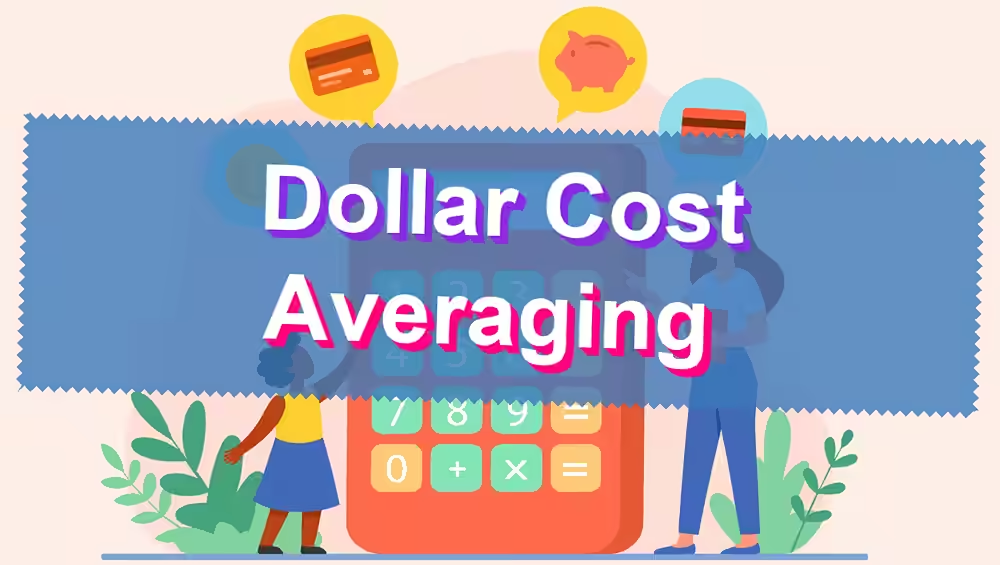
A dollar-cost-averaging calculator is an indispensable tool for those who wish to build wealth over time with little danger of market timing. The term “dollar cost averaging” refers to the practice of consistently investing the same amount of money over time, regardless of market fluctuations. You must understand the ins and outs of dollar cost averaging in order to construct a disciplined investing strategy that is effective in every market. The topic gains clarity when introduced by the dollar cost averaging calculator.
Because of the market’s volatility, many would-be financiers are wary of investing at the worst possible moment. You can build wealth over time and reduce the impact of market timing by investing consistently and regularly, as shown by a dollar cost averaging calculator. Having this knowledge will allow you to invest with assurance, regardless of how the market behaves.
Meaning of Dollar Cost Averaging
Regardless of the asset’s price, dollar cost averaging allows investors to put the same amount into it at predetermined intervals (e.g., once a month or quarter). Every month, regardless of the price, you are allowed to invest $500 in stocks or mutual funds.
One major benefit of dollar cost averaging is the fact it reduces the significance of market timing. When stock prices are high, your fixed investment doesn’t buy as many shares. You can increase your share purchase while prices are low by using your fixed investment. Compared to trying to time the market, this results in a lower average cost per share over time.
If you want to build wealth over time without worrying about when to buy and sell, dollar cost averaging is a great tool for you. People who have a steady source of income and want to put that money to work for them might also benefit from this.
Examples of Dollar Cost Averaging Calculator
An individual begins investing regularly in a diversified index fund at the age of 25 with a $200 monthly contribution. If they invest $96,000 and earn an average of 7% interest per year until they are 65 years old, according to a dollar cost averaging calculator, their total investment will be around $1.2 million.
Upon the birth of their child, a parent begins saving $300 per month toward the cost of higher education. The investment will be worth around $100,000 by the time the person is 18 years old, according to a dollar cost averaging calculator. This can help with the cost of higher education.
How does Dollar Cost Averaging Calculator Works?
Finding your future wealth is as easy as using a dollar cost averaging calculator, which takes into account your regular investment amount, investment frequency, projected return rate, and investment time duration. Based on the price fluctuations, the calculator determines the number of shares you will purchase at each investing period.
You can find out how much your investment will be worth in the future, how many shares you purchased, and the price per share using the calculator. It can demonstrate the efficacy of dollar cost averaging in volatile markets. Depending on the market conditions, it can also reveal potential shifts in your wealth.
The benefits and drawbacks of both dollar-cost-averaging and lump-sum investment are sometimes displayed side by side in dollar-cost-averaging calculators.
Formula for Dollar Cost Averaging Calculator?
The most elementary way to calculate the average cost per share is to divide the whole amount invested by the total number of shares purchased. The investment amount divided by the price at each interval is used to determine the number of shares bought at that interval.
After three months of investing $1,000 each month, you will have invested $3,000 and acquired 61.67 shares (20 in the first month, 25 in the second, and 16.67 in the third). On average, you’ll have to fork over $48.51 per share.
You may avoid having to worry about these calculations by using a dollar cost averaging calculator, which will take into consideration the specific amounts and prices of your investments to provide you with accurate estimations of your future worth and average cost.
Benefits of Dollar Cost Averaging
To further assist you in planning for the future, a dollar cost averaging calculator can show you the impact of different amounts of money and time on your investments, as well as how this investing strategy stacks up against others. These advantages can assist you in making better long-term financial decisions, in addition to helping you understand your current investments.
Market Timing Risk Reduction
The risk of losing all your investment capital at once can be mitigated through dollar cost averaging. If you invest consistently, you can mitigate the impact of market timing on your outcomes. With less uncertainty about market timing, you can rest easy.
Long-term Wealth Accumulation
A fantastic strategy to amass wealth over time is dollar cost averaging. Consistent investment, over a long period of time, generates substantial wealth via compound interest. To achieve financial independence, one must accumulate wealth over a period of time.
Simplified Decision Making
Financial decisions are simplified by dollar cost averaging. Regular investing eliminates the need to deliberate about when to put money into the market. Making decisions that are easier to grasp reduces stress and complexity.
Disadvantages of Dollar Cost Averaging
Although dollar cost averaging is generally a good idea, it does come with some issues and disadvantages. You can make better financial decisions if you are aware of these downsides.
Opportunity Cost
If you invest slowly, you won’t be able to take advantage of the opportunity to invest additional money when prices are cheap. More money would be returned if you invested a lump sum when the market was at its lowest point. Lower returns may result from opportunity cost.
Transaction Costs
Dollar cost averaging will end up costing more than investing all at once if transaction costs are applied to each investment. These days, cheap brokers don’t usually run into this issue. Transaction costs have the potential to reduce returns.
Underperformance in Rising Markets
Rather than dollar-cost-averaging, investing a lump sum is preferable when markets are continuously rising. If you had invested all of your money in the stock market at once, you would have more shares with a higher value. Underperformance during bull markets is a cost of reducing risk.
Recommended Calculators
FAQ
What’s the Best Investment Frequency for Dollar Cost Averaging?
You can invest as frequently as your income permits, however a usual and straightforward investing frequency is monthly. Alternate investment intervals such as weekly, quarterly, or annually can also be effective.
How Much Should I Invest Regularly?
Invest all of your available funds without jeopardizing your emergency fund or other bills. A little investment now can provide a large return later on.
Does Dollar Cost Averaging Work with Individual Stocks?
While dollar-cost-averaging with individual stocks can be effective, diversified funds are typically a better bet. Stocks fluctuate in value more frequently.
Can I Use Dollar Cost Averaging with Bonds?
Bonds and other assets can be invested using dollar cost averaging. This strategy is applicable to all types of investments.
Conclusion
Having a dollar cost averaging calculator on hand is essential for investors who want to build wealth gradually while reducing the risk associated with market timing. Showing you how your money may grow over time with steady, regular investing, it helps you establish a disciplined investment plan. As the article ends, the dollar cost averaging calculator keeps the key lessons clear.