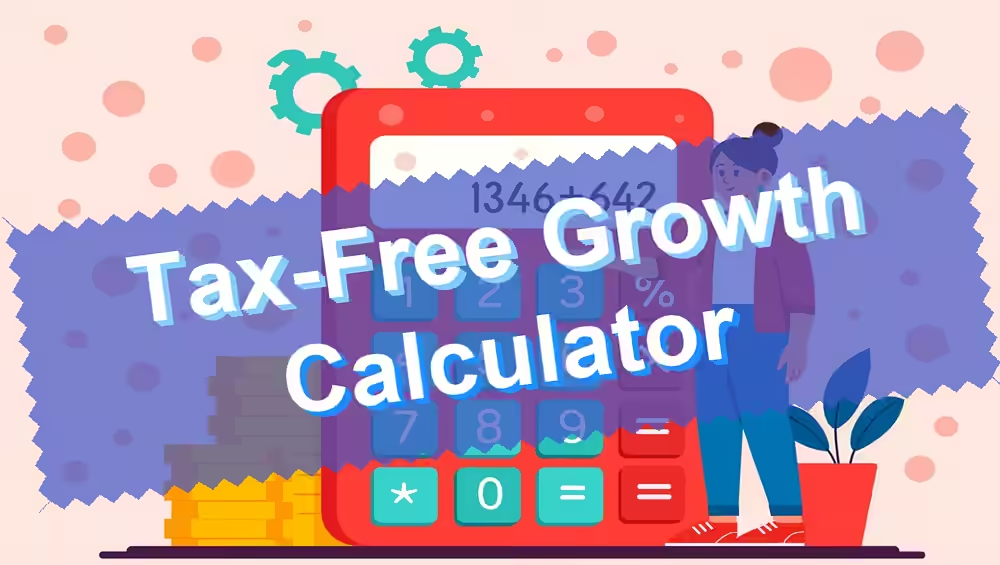
A common concept in financial planning, particularly among those looking to maximize their assets over the long term, is tax-free growth. You can see the potential tax-free growth of your investments with the help of the Tax-Free Growth Calculator. You can see into your financial future with more clarity now. Those setting up funds for retirement, education, or any other distant financial goal will find it particularly useful. The article opens with direction shaped by the tax free growth calculator.
The goal of this calculator is to make it simple for you to estimate the potential long-term growth of your assets net of taxes. By plugging in your initial investment, projected annual return, and desired investment period, you may get a decent notion of how much your money could grow. This tool is essential for anyone who aspires to make prudent financial decisions going forward.
Meaning of Tax-Free Growth
You can avoid paying taxes on the profits you receive from your investments thanks to tax-free growth. Interest, dividends, and capital gains from investments are exempt from taxes until they are actually paid out. An excellent plan would be to allow investments to develop at a quicker rate without being subject to taxes. Your money can grow at a quicker rate without annual tax payments, so you end up with more of it.
Consider a tax-free investment account and a standard savings account as examples. Even though a normal account allows you to earn interest, the government will take a portion of that income each year. In contrast, the entire amount can remain invested and grow in a tax-free account. This disparity, particularly for investments with a horizon of several years, can become critically relevant. Learn about tax-free growth if you want to maximize your investments and go where you want to go financially.
Examples of Tax-Free Growth Calculator
To understand how the Tax-Free Growth Calculator functions, let’s examine an example. The Tax-Free Growth Calculator will help you estimate how much your $10,000 Roth IRA investment could be worth after 20 years if you don’t touch it, given an annual interest rate of 6%. Planning for the future is made easier with this tool, which displays you the impact of tax-free growth on your money over time. Envision yourself with the freedom to watch as your $10,000 grows into $32,071.35. The potential earnings in a taxed account are significantly lower.
The Tax-Free Growth Calculator is another tool you may use to explore different investment opportunities. In the end, you may observe how changing the number of years or the annual return rate impacts the value of your investment. Its adaptability makes it a powerful instrument for financial planning. In order to save for a down payment, a car, or retirement, you should be aware of the potential growth of your investments. You can alter your approach to saving money after using the calculator to make informed decisions.
An additional appropriate illustration would be to contrast a tax-paying investment with one that does not. The variation in growth can be observed by entering identical values into the calculator for both scenarios. You may be surprised to learn about the advantages of tax-free investments after reading this comparison. Achieving your long-term objectives requires more than just looking at numbers; it also necessitates making prudent financial decisions.
How does Tax-Free Growth Calculator Works?
You may avoid paying taxes on interest you earn using the Tax-Free Growth Calculator. Based on the amount you invest, the expected return each year, and the number of years, the calculator uses a math formula to determine the future value of your investment. The power of compounding is factored into this formula, so when you reinvest your gains, they grow even more over time. This income can develop at a quicker rate because to the absence of annual taxes, resulting in superior returns in the long run.
The calculator typically features a user-friendly interface that allows you to input your data swiftly. Input your details, and it will calculate an estimate of your investment’s potential return. This number indicates the amount you can anticipate to have at the end of the investment period, if all input values remain constant. Altering the calculator’s parameters may also allow you to see how various scenarios impact your investment’s growth.
The calculator will display the future value of an investment if you input $5,000 as an initial investment and earn 5% per year for a period of 10 years. To get this number, one uses the compound interest formula, A = P(1 + r/n)^(nt). A is the total value of all gains (principal and interest) after n years. The fundamental quantity is denoted by P, the annual interest rate by r, the number of times interest is added each year by n, and the investment period in years is denoted by t.
Formula for Tax-Free Growth Calculator
The Tax-Free Growth Calculator makes an educated approximation as to an investment’s future value by applying the formula for compound interest. The future value of the investment, denoted as A, is calculated as follows: P is the principal amount, r is the annual interest rate, n is the number of times the interest is compounded each year, and t is the number of years. The primary distinction with tax-free growth is the elimination of annual taxes on interest, allowing for quicker development.
You can use this calculator by entering your starting investment, expected return each year, and the total number of years you intend to invest. Then, based on that data, the calculator will provide you with a projection of your investment’s future value. Assuming the input parameters remain constant throughout the investment term, this estimate is derived. Remember, though, that actual returns could vary based on factors including market conditions.
To estimate the potential growth of your investments, the formula for compound interest is an invaluable tool. Discover the impact of various circumstances on the growth of your investments with the help of the Tax-Free Growth Calculator. One way to influence the future value of your investment is to alter the yearly return rate or the investment period. In order to make prudent financial decisions and achieve your long-term objectives, this data is crucial.
Benefits of Tax-Free Growth
Having the peace of mind that comes from knowing your investments are growing tax-free is an added bonus. You may feel more secure in your ability to save for the future if you know you’re minimizing your tax liability and maximising your savings. You may have greater leeway to adjust your savings strategy as required if your investments grow tax-free. Additionally, with tax-free growth, you can accomplish your financial objectives more quickly. Roth IRAs and 529 plans are tax-advantaged savings vehicles that may help you save more money and reach your goals faster. People saving for major purchases, like a house down payment or college, may find this particularly useful.
Achieving Financial Goals
By capitalizing on tax-free growth, you can accomplish your financial goals more quickly. No matter what your savings goals are—retirement, education, or a down payment on a house—tax-free growth can help you save more money and get there faster. Investors with a longer time horizon may find this quite useful, since they can see a significant increase in their assets as time goes on. Additionally, tax-free growth might give you greater flexibility with your money, allowing you to adjust your savings strategy as required.
Flexibility in Financial Planning
You have greater leeway to adjust your savings strategy as required thanks to tax-free growth, which opens up additional possibilities for budgeting. One strategy is to start investing with a higher degree of risk when you’re young and work your way down to a more conservative approach as you near retirement age. With this leeway, you may be able to save more money and get closer to your financial goals more quickly. You may rest easy knowing that your investments are growing without incurring taxes, which reduces your overall tax liability, thanks to tax-free growth.
Higher Overall Returns
Benefiting from tax-free growth can increase your investment returns in the long run. In the absence of annual taxes, your income can accumulate at a faster rate, leading to superior returns in the long run. For those with an eye for the long term, this might be a great way to watch their investments soar. Since you can adjust your savings strategy as needed, tax-free growth could also give you greater leeway in your overall financial planning. You can save more money and get there faster if you do this.
Disadvantages of Tax-Free Growth
While tax-free growth certainly has its advantages, it is critical to consider any potential disadvantages as well. The lack of available tax-advantaged accounts is one of the main issues. If you do not meet the requirements for accounts such as Roth IRAs or 529 plans, you can miss out on the opportunity to benefit from tax-free growth. Your ability to contribute and your income level are two other factors that can affect your eligibility for these accounts.
Not Suitable for Short-term Goals
Short-term investments may not benefit from tax-free growth. The advantages of compounding don’t materialize right once, therefore investments with a shorter time horizon might not be worth the risk. Further, the advantages of tax-free growth are nullified if funds are removed from tax-advantaged accounts at an early date, as doing so might result in penalties and taxes. Instead of caving in to the temptation to withdraw your money too soon, you should have a strategy for investing it for the future. You may completely benefit from compounding tax-free growth when you utilize it toward long-term savings goals like retirement or school.
Discipline Required
If you want to grow your wealth without paying taxes, you must be very disciplined with your money. You shouldn’t give in to the temptation to withdraw funds from your tax-advantaged accounts before they’re due. All that tax-free growth won’t matter if you have to pay fines and taxes on your money if you withdraw it too soon. A solid financial plan and consistent implementation are prerequisites for making the most of tax-free growth. Because the advantages of compounding don’t materialize right away, tax-free growth might not be the best choice for investments with a shorter time horizon. You must be patient and disciplined if you want to accumulate wealth without paying taxes on it.
Market Volatility
The market still poses a risk to your investments, regardless of whether they increase tax-free. Your investment returns may be negatively or positively affected by market fluctuations, and there’s no guarantee that they will grow in the way you expect. A diversified portfolio with a long-term strategy can help mitigate these risks. When the economy is struggling, investors may find market volatility particularly challenging. However, by allowing your investments to grow at a quicker rate over time, tax-free growth can assist mitigate some of these dangers.
Recommended Calculators
FAQ
What is the Tax-free Growth Calculator?
You can predict the future value of your investments without paying taxes on them each year with the help of the Tax-Free Growth Calculator. It makes an educated forecast as to how much your funds will increase over time using the concept of compound interest, ignoring taxes. Anyone setting up substantial funds for long-term goals, such as education, retirement, or other major purchases, may find this calculator invaluable.
How Does the Tax-free Growth Calculator Work?
To estimate your investment’s future value, the Tax-Free Growth Calculator applies the formula for compound interest. Here you can enter your desired investment amount, annual income projections, and investment horizon in years. Then, based on that data, the calculator will provide you with a projection of your investment’s future value. Assuming the input parameters remain constant across the investment term, this estimate is derived.
What are the Benefits of Tax-free Growth?
A faster rate of growth, a smaller tax bill, and more flexibility in managing your money are just a few of the advantages of tax-free growth. Using tax-advantaged accounts, such as 529 plans and Roth IRAs, can help you save more money and accomplish your financial goals more quickly. Additionally, knowing that your investments are growing tax-free and reducing your tax liability might give you some peace of mind.
Are There Any Disadvantages to Tax-free Growth?
You should consider the potential drawbacks of tax-free development in addition to its many advantages. There are a number of drawbacks to consider while investing, including the following: limited access to tax-advantaged accounts, constant market volatility, the necessity of disciplined saving and investing, contribution restrictions, and potential unsuitability for investments with a shorter time horizon. Having a solid financial plan and being aware of these drawbacks will allow you to maximize the benefits of tax-free growth.
Conclusion
A knowledge of tax-free growth and its application, such as the Tax-Free Growth Calculator, is essential for anyone planning to save for the future. Learning the fundamentals of tax-free growth will help you feel more secure about your financial future and make better investing decisions. Over long time periods, the opportunity to earn interest and dividends without paying taxes on them each year can significantly impact your total return. The strategic implementation of the tax free growth calculator is key to competitive financial advantage.