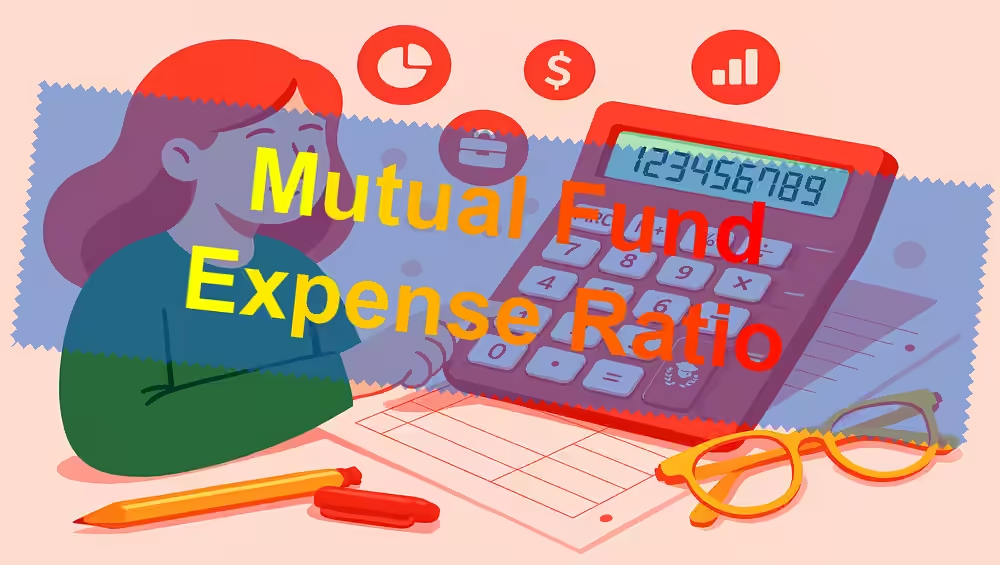
Mutual funds are a common way for people to invest their money and see it grow over time. People frequently overlook the expenditure ratio, which is a crucial metric. Even this small percentage can significantly impact your profits in the long run. A mutual fund expense ratio calculator is an essential tool for any investor serious about making a profit. It breaks out the percentage of your budget that goes toward fees and the percentage that goes toward development. The mutual fund expense ratio calculator clarifies the topic before deeper exploration.
Investing in a professionally managed portfolio of stocks, bonds, and other assets is what’s known as a mutual fund. They raise capital from numerous investors and then utilize it to buy a wide range of stocks. There is a cost to this diversification, notwithstanding its benefits. Annually, investors in funds and exchange-traded funds (ETFs) pay a fee known as the expense ratio. It accounts for the operating expenses of the fund, including management fees, administrative charges, and other expenses, and is expressed as a percentage of the fund’s assets.
Meaning of Mutual Fund Expense Ratio
A mutual fund’s cost of ownership is represented by its expense ratio. There is an annual fee that all funds must pay to their shareholders. Daily operating expenses, including management fees and administrative expenditures, are covered by this charge. It comes out of the overall value of the fund, which is a percentage rather than a withdrawal from your personal account.
Home mortgage payments are similar to rent payments. You won’t even need to write a check to your landlord—the rent is automatically deducted from your bank account. The expenditure ratio has an indirect impact on your returns because it is deducted from the fund’s assets. A lower potential profit is associated with an expense ratio that is larger. That’s why, before deciding on a mutual fund, it’s wise to educate yourself on expenditure ratios and compare them.
Examples of Mutual Fund Expense Ratio Calculator
If you want to know how fees influence your investments in mutual funds, use the expense ratio calculator. For example, consider two funds with different expenditure ratios: one has 0.25% and the other has 1%. Along with your initial investment and annual return target, you plug these figures into the calculator. The calculator will then provide you with an estimate of the expected return on your investments for the next 10, 20, or 30 years.
As an illustration, the calculator may indicate that your initial $50,000 investment could grow to approximately $240,000 after 30 years if you choose a fund with an expense ratio of 0.25% and an expected yearly return of 7%. Your investment could only grow to around $200,000 if the fund’s fee ratio was 1%. This disparity of $40,000 highlights the need of considering expense ratios when selecting mutual funds.
When you are preparing to retire is another period. It is possible to be comparing various retirement accounts with varying spending ratios. To see how these fees will influence your retirement funds over time, you can use the expense ratio calculator for mutual funds. By using this, you may improve your decision-making and ultimately save a significant amount of money.
How does Mutual Fund Expense Ratio Calculator Works?
An effective and straightforward way to understand the impact of fees on your investments is by using a mutual fund expense ratio calculator. You just need to plug in your desired investment amount, your anticipated return per year, and your expense ratio. The calculator then uses these figures to make an educated guess as to the growth of your investment, with and without the expenditure ratio.
It’s a financial equivalent of a crystal ball. It doesn’t reveal future events, but it does provide potential outcomes of different scenarios. The calculator can show you the potential increase in value over10,20, or 30 years when comparing two funds with different expenditure ratios. You may be able to use this information to your advantage when deciding which fund is right for you.
Similarly straightforward is the mutual fund expense ratio calculator. Use it even if you don’t have a clue about money. The calculator will take care of everything else once you enter the data. Discovering the true cost of investing in mutual funds is made simple and fast using this method. No matter your level of experience as an investor, this tool has the potential to completely transform the way you manage your funds.
Formula for Mutual Fund Expense Ratio Calculator
Compounding is the theoretical basis for the formula used by the mutual fund cost ratio calculator. Considerations include the expense ratio, the expected yearly return, and the initial investment. After that, the calculator will show you the long-term growth of your investment after fees are taken into consideration. The future value, denoted as V, is equal to the initial investment, P multiplied by the expected annual return, r, divided by the cost ratio, and the time in years, denoted as t.
The formula to calculate the future value of $10,000 invested in a fund with an expense ratio of 0.5% and an annualized return prediction of 7% is: Future Value = 10,000 x (1 + 0.07 – 0.005)^t. Even after expenses are deducted, this computation reveals the potential growth of your investment. Finding out the true cost of investing in mutual funds is made much easier using this method.
One tool that can simplify this procedure is the mutual fund expense ratio calculator. You save time and effort because the calculator calculates everything for you. You can easily see the growth of your investment by entering the necessary data into the calculator. You can quickly and easily see the impact of fees on your assets using this method.
Benefits of Mutual Fund Expense Ratio
That it’s easy to see is an additional plus. A mutual fund’s expense ratio will reveal the true cost of ownership. Gaining the trust of investors requires this level of transparency. Knowing precisely what you’re paying for allows you to make more informed decisions. Additionally, fund managers are motivated to maintain low expenses since investors tend to choose funds with lower expense ratios. An essential metric for evaluating a mutual fund’s performance is the expense ratio. It enables you to decipher the true cost of investment by removing the superficial benefits. No matter your level of expertise as an investor, you will find this material to be incredibly valuable. Making wise decisions and maximizing your financial resources are of utmost importance.
Builds Trust with Investors
Honesty is the foundation of trust. Knowing precisely what they are paying for increases the likelihood that investors will trust the fund management. For assets with a lengthy lifespan, this trust is crucial. The investment industry benefits from this since it encourages fund managers to be transparent about their costs and fees. Both investors and fund managers benefit from this level of trust.
Promotes Transparency
Before making any financial decision, it’s crucial to be honest. The cost of owning a mutual fund can be easily seen through its expense ratio. Because of this transparency, investors may make decisions with more certainty. Since investors want to put their money into funds with reduced expense ratios, this fact further motivates fund managers to do the same. Investors and fund managers alike will benefit from a more favorable investing climate.
Aids in Financial Planning
You should be familiar with the mutual fund expense ratio in order to properly manage your finances. Better financial planning is possible after you have a better grasp of the true cost of investment. When saving for retirement, for instance, it would be helpful to know how much each retirement plan costs. In order to achieve your long-term financial objectives, this data is quite useful.
Disadvantages of Mutual Fund Expense Ratio
There are some advantages and some disadvantages to the mutual fund cost ratio. The fact that it could be misleading to those who aren’t familiar with it is one of its major drawbacks. If a fund’s performance is poor, for instance, its low expense ratio may not be the best choice. The expense ratio is just one metric among many that should be considered when evaluating a fund, along with performance and investment strategy.
May Not Reflect True Costs for Small Investors
Investors with a smaller stake may be misled by the mutual fund expense ratio. This is due to the fact that the average assets of the fund, upon which the expenditure ratio is based, can be substantially larger than the contributions of any one investor. The cost to a small investor might not be that great for a fund with an expense ratio of 1% if the average assets of the fund are in the billions.
Does Not Account for All Costs
Additionally problematic is the fact that the mutual fund charge ratio does not account for all investment expenses. It doesn’t pay for things like purchasing and selling fund shares, for example. Over time, these additional expenses could eat into your profits. Keep these additional costs in mind as you research mutual funds.
Can Influence Investor Behavior
In unexpected ways, a mutual fund’s expense ratio might influence investor behavior. Investors may favor funds with lower expense ratios over others, regardless of how well such funds perform. You risk missing out on opportunities and making poor investment decisions if you act in this way. The expense ratio is just one metric among many that should be considered when evaluating a fund, along with its performance and investment strategies.
Recommended Calculators
FAQ
What is the Mutual Fund Expense Ratio?
An annual fee known as the expense ratio is charged to all mutual fund owners. Management fees, administrative expenses, and other operational expenditures of the fund are covered by this. It’s not deducted from your account but rather from the fund’s assets as a percentage.
How Does the Mutual Fund Expense Ratio Affect My Returns?
By reducing the amount of money that is working for you, the expense ratio of a mutual fund lowers your returns. If the expenditure ratio is high, it means that expenses are eating up a larger portion of your investment rather than growth. This can significantly impact your profits in the long run, particularly if you want to invest for an extended period of time.
What is a Good Expense Ratio for a Mutual Fund?
A reasonable expense ratio will be defined by the type of mutual fund and its investment strategy. Expense ratios for index funds are typically lower, coming in at 0.1 percent or lower. An actively managed fund’s expense ratio can be one percent or higher. The performance and investing strategy of the fund, in addition to the expense ratio, are crucial.
How Do I Use a Mutual Fund Expense Ratio Calculator?
A calculator for the expense ratio of a mutual fund is simple to use. You just need to plug in your desired investment amount, your anticipated return per year, and your expense ratio. The investment potential growth rates, with and without the expenditure ratio, are then displayed by the calculator. In this way, you may compare the true costs of various funds.
Conclusion
An essential consideration when purchasing mutual funds is the expenditure ratio. The management fee is the annual expense that all funds charge their owners to cover expenditures like administrative charges and fees. Better investment decisions, fund comparisons, and financial planning are all possible with knowledge of the expense ratio. To wrap up, the mutual fund expense ratio calculator helps summarize the points covered clearly.