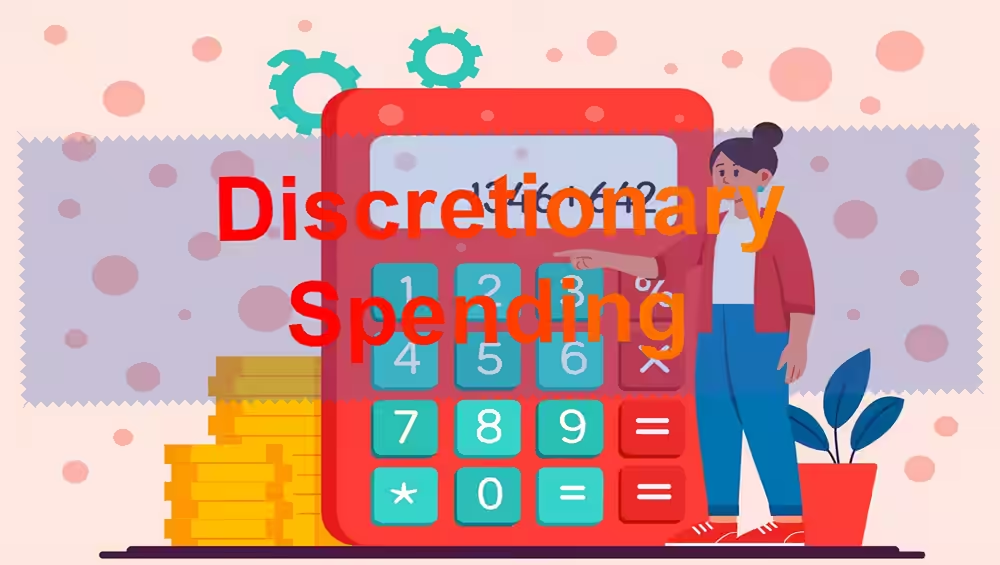
If you want to have a handle on your finances and know where your money is going, a discretionary expenditure calculator is a useful tool. To keep tabs on your discretionary spending and identify where your money is going, this calculator is a lifesaver. This calculator is essential if you want to take financial management seriously. The article starts cleanly through the discretionary spending calculator.
Keeping track of your discretionary spending is critical if you want to achieve your financial objectives or build money. When consumers see how much money they waste on unnecessary items, it might be shocking. If you want to know how much money you spend on things like subscriptions, entertainment, and eating out, a discretionary expenditure calculator might help you out.
Meaning of Discretionary Spending
The term “discretionary spending” refers to the outlays of cash on non-essentials that one could forego in an emergency. It includes things like going out to restaurants, hobbies, vacations, subscriptions, and other supplementary purchases. Discretionary spending is distinct from essential expenditure. Spending on necessities like food, housing, and utilities is essential.
The freedom and autonomy to choose are the defining characteristics of discretionary spending. As your financial situation changes, you have the option to cut back or even eliminate discretionary expenditures. Because it is subject to change, monitoring your discretionary expenditure is crucial when you are attempting to achieve your financial objectives or maintain track of your budget.
Income, lifestyle choices, and financial priorities all have a significant impact on how much money is available for discretionary expenditure. While some allocate a little portion of their income to discretionary expenditure, others dole out a lot more. Both your ideals and your financial situation should be considered when deciding on an appropriate level of discretionary spending.
Examples of Discretionary Spending Calculator
To simulate different spending scenarios, a young professional utilizes a discretionary expenditure calculator. Their discretionary expenditure is currently $1,500 per month; according to the calculator, they could save an additional $6,000 per year by reducing it to $1,000. This little fraction might grow to over $100,000 in ten years if investments yield a positive return.
A couple who are getting close to retirement use a discretionary spending calculator to figure out how much money they will need for retirement. By adjusting a few settings, the calculator reveals that their discretionary spending is higher than anticipated, and that they have room to grow their retirement savings rate.
How does Discretionary Spending Calculator Works?
After deducting all of your essential expenses from your gross income, a discretionary spending calculator will display the remaining amount that can be used to purchase personal items. You may use the calculator to break down your expenditure into its component parts and see how much money goes into things like subscriptions, food, shopping, and entertainment.
The tool keeps track of your spending and shows you patterns and trends over time. It shows you where your money is going and how you can cut back without sacrificing quality of life. The majority of budgeting tools also allow you to set expenditure targets and monitor your progress towards them.
By revealing how much money you have available to spend on wants rather than needs, the calculator encourages you to be more deliberate with your spending. Keeping track of your spending on things like coffee, streaming services, and dining out can help you make better decisions about how those expenses relate to your financial goals.
Formula for Discretionary Spending Calculator?
Discretionary spending is the amount left over after deducting taxes from total income and necessary expenses. It’s a good way to spend money on things you don’t really need. After you’ve taken care of the essentials, this method shows you how much money is left over for luxuries.
Use this calculation to determine your discretionary spending percentage: Discretionary spending as a percentage is calculated by dividing discretionary spending by total income and then multiplying the result by 100. Here you can see, as a percentage, how much of your income is spent on unnecessary items.
Annual Savings = Monthly Reduction x 12 is a formula that can be used to calculate the potential savings that could be achieved by reducing discretionary spending. Reducing your discretionary expenditure by a set amount each month could result in a significant annual savings, as shown by this equation.
Benefits of Discretionary Spending?
You may reduce financial stress, make better spending decisions, and get closer to your financial goals with the help of a discretionary expenditure calculator. The advantages of this go well beyond simple budgeting; they can also aid in the accumulation of wealth and the assurance that comes from knowing your money is secure.
Clear Visibility of Spending Patterns
You can see your spending habits and patterns in one place with the help of a discretionary expenditure calculator. By comparing your expenditure on various items, you can identify potential areas where you may be overspending. Changing your spending habits for the better begins with this kind of candor.
Acceleration of Financial Goals
If you can reduce your discretionary spending, you may be able to save more for retirement, pay off debt, or establish an emergency fund. Cutting back on discretionary spending, no matter how little, will help you attain your financial goals in the long run.
Reduced Financial Stress
Financial anxiety significantly decreases when one is in control of their expenditures and knows exactly how much money they are spending. You won’t feel guilty about overspending or concerned about where your money is going. Your health and happiness will improve as a result of this decrease in stress.
Disadvantages of Discretionary Spending?
Despite its many advantages, controlling discretionary spending is not without its share of challenges and drawbacks. The ease with which one can spend too much and the difficulty in maintaining self-discipline are the main concerns.
Complexity in Categorization
Some expenses may not be essential, but it’s not always easy to tell. Is a gym membership, for example, required or voluntary? Is it required to eat out for work or is it a personal preference? It can be more difficult to keep track of your unnecessary spending when there are ambiguities.
Risk of Over-restriction
You risk missing out on life-improving experiences and enjoyable activities if you drastically reduce your discretionary expenditure. Anger and difficulty in sticking to your budget are the results of having too many restrictions. Striking the ideal equilibrium is of utmost importance.
Difficulty Maintaining Discipline
Budgeting and keeping track of your spending requires a great deal of self-control and effort. It’s tempting to revert to old habits of spending when you’re irritated or tired. Restricting your discretionary spending over an extended period of time requires self-discipline.
Recommended Calculators
FAQ
What Percentage of My Income Should I Allocate to Discretionary Spending?
Your financial situation and your desires determine the amount of money you have available to spend on your desires. Experts in personal finance often advise allocating 10% to 30% of income for discretionary spending, after covering essentials and savings. Finding the optimal percentage is easy with the help of a discretionary spending calculator.
How Do I Distinguish Between Essential and Discretionary Spending?
Budgeting for necessities includes things like rent or mortgage, food, transportation, and health insurance. Consumption of non-essential goods and services, as well as dining out, are instances of discretionary spending. Investing on something that you could go without is likely unnecessary.
Can I Reduce Discretionary Spending Without Sacrificing My Quality of Life?
In most cases, cutting back on frivolous spending won’t significantly diminish your standard of living. By being more selective and avoiding impulse buys, you can potentially save money without sacrificing quality of life. A discretionary spending calculator can help you identify potential areas where you might cut costs.
How Often Should I Review My Discretionary Spending?
Review your discretionary spending at least once a month to monitor your progress toward your goals and the amount you spend. As a preventative measure, some people choose to review their expenses on a weekly basis. You can hold yourself accountable and make necessary adjustments with the help of regular reviews.
Conclusion
Using a discretionary expenditure calculator is a great first step toward understanding and controlling one’s spending habits. By revealing where your money goes toward unnecessary expenses, it empowers you to make wise spending decisions. As the discussion ends, the discretionary spending calculator keeps the insights easy to understand.