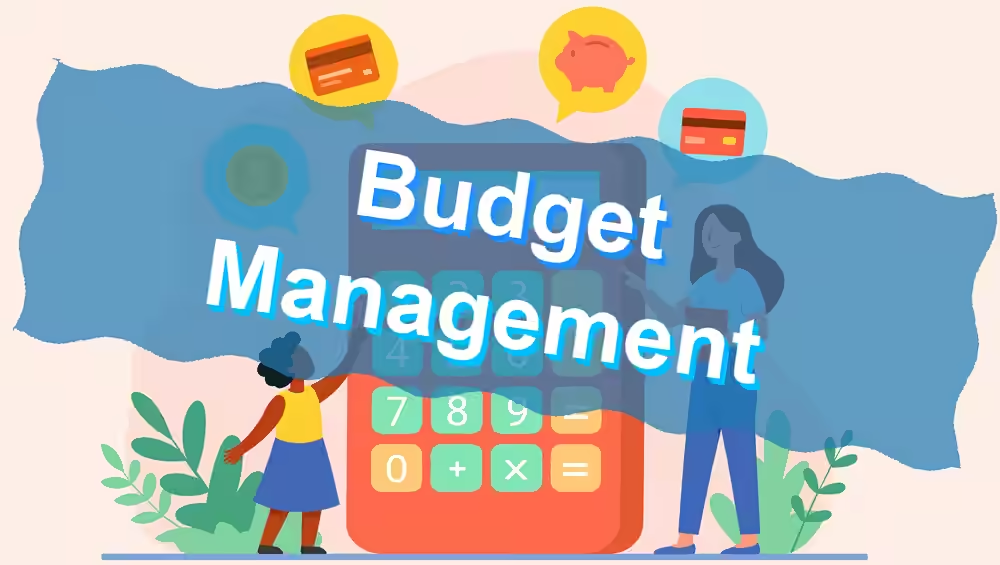
Any individual, group, or company that wants to create, maintain, or enhance their financial plan needs a budget management calculator. Achieving your financial goals, controlling your spending, and building wealth all depend on your budget management skills. If you want to be financially secure, you need to keep track of your spending and make a strategy. The budget management calculator establishes a strong starting point.
Many people struggle with budgeting due to an absence of a systematic approach to recording their income and expenditures. You may create a detailed budget, monitor your spending against it, and discover areas to cut costs with the help of a budget management calculator. With this information, you may get control of your financial situation.
Meaning of Budget Management
Creating a spending plan, monitoring actual expenditure, and adjusting the plan as needed are all components of effective budget management. You may better manage your housing, food, transportation, and savings expenses with the help of a budget.
A well-managed budget requires knowledge of income and expenditures, the establishment of spending limitations for various categories, and the maintenance of an accurate record of actual expenditures. Finding out where your money is going is as simple as comparing your expenditures to your budget and making adjustments as needed.
Budget management is an ongoing activity that requires constant attention and adjustment. As your income and expenses fluctuate, it’s important to adjust your budget accordingly to reflect your current circumstances and objectives.
Examples of Budget Management Calculator
With $100,000 in monthly revenue, a company may afford to pay for things like salaries, rent, supplies, marketing, and more. With the help of a budget management calculator, you can see exactly where your spending went over or under your allotted amount.
Someone without a regular paycheck would create a spending plan based on their average monthly income and adjust it each month to account for their actual earnings. When one’s income fluctuates, a budget calculator could be a lifesaver.
How does Budget Management Calculator Works?
Use your income and priorities to inform your budgeting with the help of a budget management calculator. After there, it monitors your actual spending in relation to your budget. It breaks out spending by category, finds out how much was spent in each category, and highlights discrepancies between planned and actual amounts.
The calculator provides detailed statistics that show where your money is going, highlights areas where you’re spending too much, and suggests adjustments to help you stick to your budget. Based on current trends, it can also predict your future spending habits.
You can set financial goals and monitor your progress toward them with the help of many budget management calculators.
Formula for Budget Management Calculator?
To manage a budget, the first guideline is to take all income and subtract all expenses. This will give you your surplus or deficit. Any surplus funds might be put toward savings or used to reduce debt. If your income is lower than your expenses, you will need to find a way to increase your revenue.
For every single budget category: Costs incurred Take the difference between the planned and actual expenditures to determine the variance. You overspent if the variance is positive and underspent if the variance is negative.
You may avoid having to worry about these calculations and get straight forward data on your budget’s performance with the help of a budget management calculator.
Benefits of Budget Management
Additionally, a budget management calculator can assist you in identifying spending trends, eliminating wasteful expenditure, achieving your financial objectives, and building your wealth. These advantages can assist you in making better financial decisions, going beyond just keeping track of your spending.
Emergency Fund Building
Creating a budget that allocates funds for savings will help you build up an emergency reserve. You may rest easy knowing that your money is secure in this fund. Having money set aside in case of an emergency might alleviate financial stress.
Debt Management
Creating a budget allows you to allocate funds specifically for paying off debt and monitors your progress towards debt freedom. Your debts might be paid off faster with this management. Staying on top of your debt is beneficial for your financial situation.
Financial Peace of Mind
When you know where your money is going and have a plan for it, you can rest easy. Problems with money become less stressful when you have this peace of mind. You feel less pressure when you have money.
Disadvantages of Budget Management
Budgeting is useful, but there are a lot of challenges and obstacles to overcome when managing a budget. Identifying these issues will help you deal with them more effectively.
Unexpected Expenses
Expenses that aren’t in your budget could cause financial crises. You should include in some wiggle room because you might end up spending more than you anticipated. Distorted budgets might result from unforeseen expenses.
Income Variability
People whose income fluctuates may find it challenging to create a consistent budget. Because of fluctuations in revenue, you may need to revise your budget on a regular basis. Alterations to one’s income make budgeting more challenging.
Complexity
A detailed budget requires time and energy to create and maintain. People may be discouraged from creating a budget due to its perceived complexity. Creating a budget can be challenging in complex situations.
Recommended Calculators
FAQ
How Do I Create a Budget?
Start by compiling a complete accounting of your income and expenditures. Sort your spending into categories and allocate funds accordingly, taking into account your priorities. To simplify this process, you might use a budget management calculator.
What’s a Good Budget Allocation?
A common method of allocating funds is the 50/30/20 rule, which states that one should set aside 50% for necessities, 30% for wants, and 20% for savings and debt repayment. Adjust as necessary to fit your goals and circumstances.
How Often Should I Review My Budget?
To keep track of your spending and make necessary adjustments, review your budget monthly. To take into consideration changes in revenue or expenses, conduct a more thorough review every three to six months.
What If I Overspend in a Category?
Reduce spending in another area or discover a means to increase your income if one item is eating into your budget too much. You can see exactly where you need to cut costs by using a budget management tool.
Conclusion
An essential tool for anyone serious about managing their finances and getting where they want to go is a budget management calculator. With its assistance in creating a budget, monitoring expenditure, and identifying areas for potential savings, it equips you to make more informed financial decisions. As we conclude this section, the budget management calculator maintains focus.