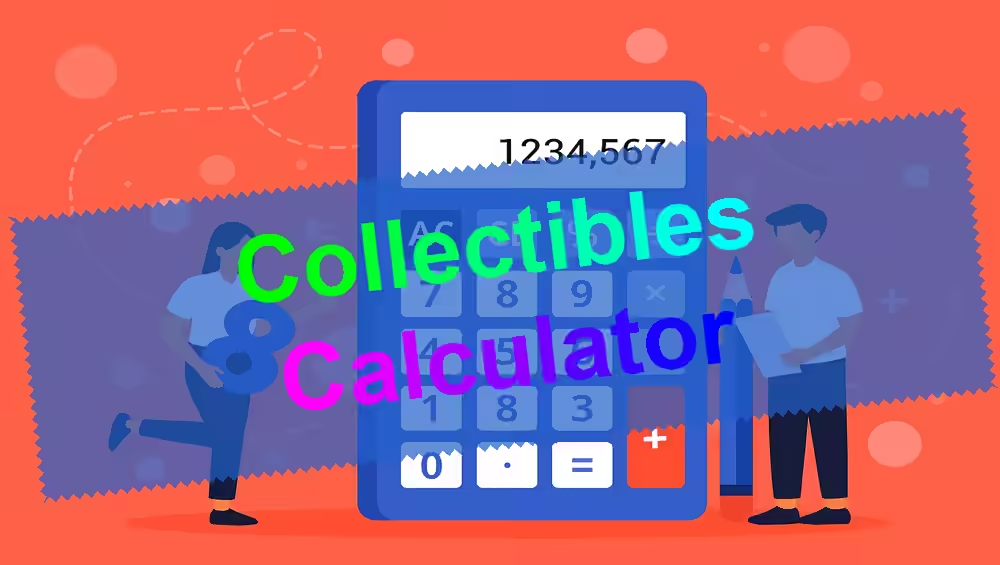
Get yourself a Collectibles Calculator if you’re a collector. No matter how long you’ve been collecting or how little you know, this calculator will be useful for tracking your collection’s value. It’s more than simply a tool; it’s a collector’s best buddy who clarifies your investment and predicts the potential future value of your stuff. The collectibles calculator opens with a clear statement of purpose.
Coins, stamps, books, and artwork are just a few examples of the many types of collectibles. The unique history and monetary worth of each object make them valuable possessions. Taking good care of a collection, particularly if you are interested in its value, can be challenging. In this case, the Collectibles Calculator would be useful. You may quickly determine the value of your possessions by entering the details about them, which simplifies things.
Meaning of Collectibles
Things of monetary, rarity, or historical worth are considered collectibles. These items could range from everyday necessities to rare masterpieces. Collectibles tend to have value beyond their original use, albeit this definition is subjective. Things like vintage toys, sports jerseys, stamps, coins, and more might be considered collectibles.
Rare, highly sought-after, or historically significant items can cause a collection’s value to rise over time. For example, the initial value of a vintage comic book may be low, but its value can skyrocket if it becomes rare. This is why most collectors invest in items they anticipate appreciating in value. One of the most exciting parts of collecting is discovering an unexpected treasure and seeing its value rise.
Examples of Collectibles Calculator
There is a wide variety of uses for the Collectibles Calculator. Use the calculator to find out how much your collection of vintage toys is worth, for instance. A unique action figure from the ’80s may be in your possession, and its value may have increased over the years. Find out its current value as well as its potential future value with the help of the calculator.
The Collectibles Calculator can potentially be a game-changer for sports memorabilia collectors. Imagine owning a jersey that a famous athlete has personally signed. Consider the athlete’s career and the item’s current state, among other factors, to determine its current value and how much it could increase or decrease over time with the help of the calculator. If you want to make educated decisions on your collection, this data is invaluable.
How does Collectibles Calculator Works?
There is certain information about your items that is required in order to utilize the Collectibles Calculator. You must specify the item’s vintage, condition, rarity, and any other distinguishing features. The current value of the item is determined by the calculator’s algorithms, which take into account market trends and sales history. Even those without a background in finance should be able to accomplish it.
Enter the data, and the calculator will provide a ballpark figure. While not guaranteed, this valuation should offer you a ballpark for what your item is likely worth. Consider this data when you make a decision about purchasing, selling, or insuring your collectibles. It can make your investments more fruitful and your hobbies more enjoyable.
Formula for Collectibles Calculator
The Collectibles Calculator uses a number of algorithms to make an estimate of your items’ value. These algorithms take market trends, rarity, condition, and age into account. Because of the significance of factors like the item’s age and condition in determining its value, the formula may include these as variables. The calculator then generates an estimate by utilizing these variables in conjunction with historical data and current market trends.
Is there an exact way that this mathematical formula has to be written? No. The specific formula may vary according to the type of collection and the unique characteristics of each object. However, the fundamental concept remains unchanged: input accurate data and utilize algorithms to get an estimate. You don’t need a math degree to follow this method; it’s designed to be intuitive. The calculator has already done the legwork and can give you a decent ballpark for your item’s value.
Benefits of Collectibles
Feeling good emotionally is another benefit of collecting. You may have a sense of pride and fulfillment upon acquiring each item in your collection. From an old toy to a rare comic book, every item in your collection adds character. Because of this personal connection, collecting is both enjoyable and fulfilling.
Cultural Value
As symbols of societal norms and ideals, collectibles have a deeper purpose than just material possessions. They provide light on the way of life in a particular place and time, allowing us to better understand the society and culture of that era. An antique movie poster, for instance, could hold significant cultural value. Possessing such items may enhance your collection’s value and perhaps foster a stronger sense of cultural connection.
Educational Value
Collectibles are more than just objects; they may be educational as well. You can learn about history, culture, and art from them. An ancient coin, for example, can provide light on the lifestyle and events of its time. Having access to these kind of items might enhance your collection by teaching you new things. Including educational components in your hobby enhances its appeal and enjoyment.
Rarity and Exclusivity
The rarity and one-of-a-kindness of collectibles make them highly desirable. In general, an item’s value is directly proportional to its rarity. For instance, due to their scarcity, vintage stamps that are considered rare might fetch astronomical prices at auction. The thrill and excitement of collecting is amplified by this rarity. Having the item isn’t enough; you want to have something truly unique and exceptional.
Disadvantages of Collectibles
There are many positive aspects to collecting, but there are also some negative aspects. One of the major negatives is the potential for financial loss. Even though not all collectibles depreciate with time, some might. As an example, the value of a popular toy from the 1980s may have drastically dropped since then. This monetary risk should be considered when putting together a collection.
Space Requirements
A common complaint about collectibles is the amount of space they require. If you own a lot of belongings, you should find a designated storage space for them. Those who reside in cramped quarters may find this task particularly challenging. Finding a secure location to keep the items is just as important as having the objects themselves.
Market Fluctuations
Variations in the market can affect the worth of heirlooms and other antiques. A historic stamp’s value may have skyrocketed one year ago but plummeted this year due to fluctuations in the market. As a result, estimating the long-term value of your collection may seem challenging. What determines an item’s value is not only the item itself, but also the state of the market.
Insurance Costs
The value of collectibles, which can be quite expensive, is best protected by insurance. The premiums for collecting rare and expensive objects can mount up rapidly. You should get this insurance to protect your investment, but it might be expensive. Possessing the items isn’t enough; you must also guarantee their security.
Recommended Calculators
FAQ
What is a Collectibles Calculator?
You may find out how much your treasures are worth with the help of the treasures Calculator. It takes product details and historical sales data along with present market trends and uses algorithms to generate an estimate. Collectors who are unsure on how to invest their wealth will find this tool to be an invaluable resource.
How Does the Collectibles Calculator Work?
Simply enter the details of your items into the Collectibles Calculator. You must specify the item’s vintage, condition, rarity, and any other distinguishing features. The current value of the item is determined by the calculator’s algorithms, which take into account market trends and sales history. Even if you have no prior knowledge or experience with financial matters, anyone can follow this straightforward strategy.
What Information Do I Need to Input Into the Collectibles Calculator?
In order to utilize the Collectibles Calculator, you must provide it with specific details regarding your items. Considerations like as the item’s age, condition, rarity, and unique qualities are all part of this. Your estimate will be more precise if you provide more details. You should be as thorough as you can be if you want the best results.
Can the Collectibles Calculator be Used for Any Type of Collectible?
There is a wide variety of uses for the Collectibles Calculator. Use the tool to find out how much your vintage coins, stamps, toys, or sports memorabilia are worth. As it can accommodate a wide variety of artifacts, it is an invaluable asset to any collector’s arsenal.
Conclusion
Get yourself a Collectibles Calculator if you’re a collector. It simplifies the process of determining the value of your possessions, providing you with the data necessary to make informed decisions. Whether you’re an experienced collector or just getting your feet wet, this calculator can assist you in staying organized, making wise decisions, and enhancing your enjoyment of your collection. This conclusion reinforces the value of the collectibles calculator.