Budgeting for fun used to feel pointless to me. Entertainment money existed in this separate category that didn’t need attention like rent or groceries. Then $380 vanished in one month and I couldn’t remember what I’d enjoyed.
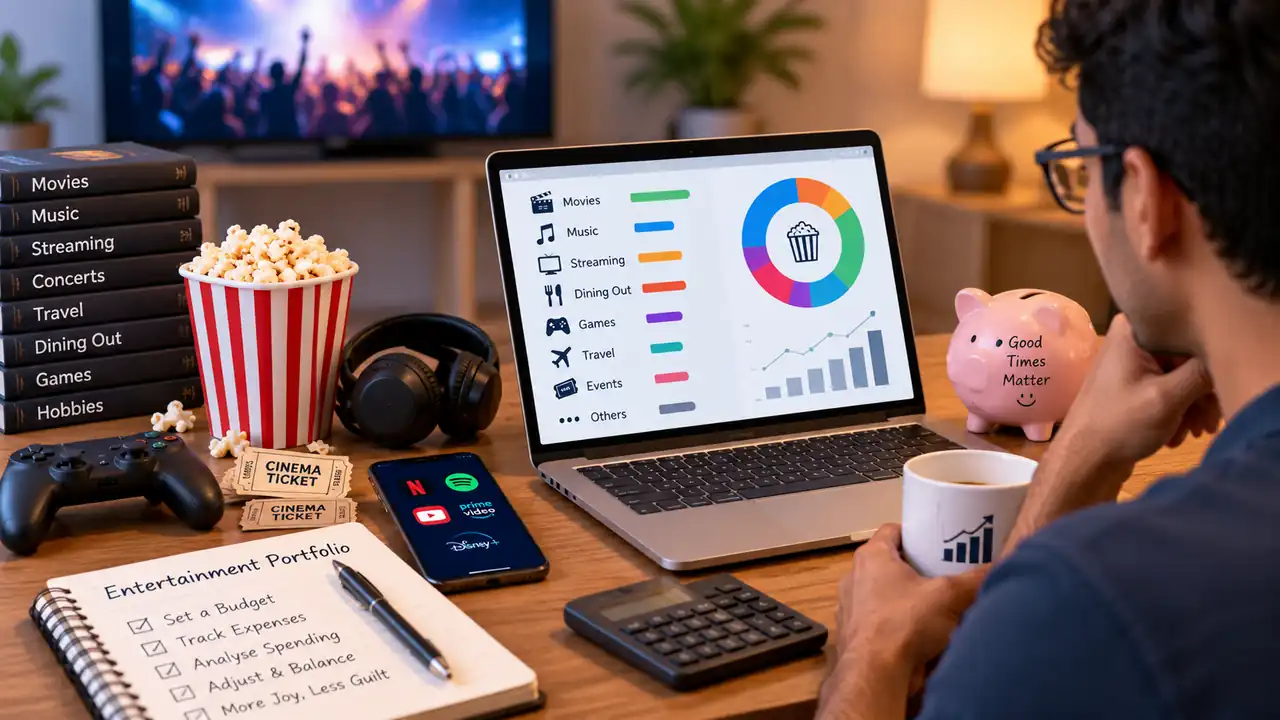
That’s when everything shifted. I started tracking every dollar going toward entertainment exactly like I’d monitor actual investments. Streaming services got logged. Game subscriptions got counted. That $47.50 I dropped on mobile app purchases in one sitting. Treating leisure spending like a mini-portfolio works way better than expected.
The Numbers Don’t Lie
I pulled three months of bank statements. Between January and March, digital entertainment consumed $1,240 of my money. That’s $413 per month on average, which looks wild when you write it out. Some purchases made sense. But many were impulse decisions I’d forgotten within days.
Patterns emerged fast. Tuesday nights between 8pm and 10pm were my danger zone. During those hours I’d browse slot games or download new apps, usually after exhausting workdays when my decision-making was nonexistent. Recognizing that two-hour window helped me build better guardrails.
Breaking Down My Entertainment Budget
I’m not suggesting you need a spreadsheet for every purchase. But categorizing helped me distinguish between money that brought genuine value versus money that evaporated:
Subscriptions I genuinely used weekly stayed in the budget. One-time purchases delivering at least 10 hours of real enjoyment earned their keep. Impulse buys I regretted within 48 hours got their own painful category. Social entertainment that doubled as quality time with friends always justified itself.
Everything else got evaluated monthly based on actual usage patterns, not what I optimistically thought I might use someday.
Setting Limits That Actually Stick
I’d tried the generic “only spend X per month” approach before. Never stuck. Too vague to mean anything. Instead, I shifted to a points system that works like diversifying investments. Each entertainment category received a specific allocation: 40% for subscriptions I’d confirmed using at least twice weekly, 30% for new experiences or games, 20% for spontaneous fun, and 10% as overflow buffer.
Those percentages meant nothing until I attached specific dollar amounts. For my situation, that translated to $165 for subscriptions, $124 for new entertainment, $82 for spontaneous purchases, and $42 as buffer. Writing down “$82 for spontaneous fun this month” hit completely different than thinking “don’t overspend” as some vague goal.
What Changed After Six Months
I’ve maintained this system since April. My average monthly entertainment spending dropped to $287 by September, a 30% reduction without feeling deprived. More importantly? I actually remember what I spent money on. Every purchase feels intentional instead of background noise on my credit card statement.
I’m having more fun overall. Limiting choices reduced my decision fatigue. When I spend money on entertainment now, I do it because I genuinely want that specific experience, not because I’m bored and mindlessly scrolling at 9:37pm on a Tuesday.
You don’t need fancy software or a finance degree. Just start counting what goes out and asking whether purchases are buying happiness or filling time.
Looking at Entertainment as a Return on Enjoyment
One of the biggest benefits of monitoring entertainment spending is that it changes how I consider fee. With investments, I don’t look handiest at how a good deal money I installed. I also bear in mind performance, threat, and whether or not the investment nonetheless suits my dreams. Entertainment may be evaluated in a rather comparable manner.
For example, a $15 film rental that provides exciting hours may also provide better price than a $forty subscription I barely open. Similarly, spending $60 on a live performance that will become a memorable enjoy can be extra profitable than making several small purchases that provide best brief exhilaration.
I additionally began calculating a easy “price in line with hour of entertainment.” It isn’t always meant to turn every enjoyment activity right into a mathematical exercising. Instead, it offers me a useful fact take a look at. If I spend $30 on something and use it for 15 hours, that feels very special from spending $30 on something I abandon after 20 minutes.
Reviewing the Portfolio Regularly
Entertainment spending also needs periodic rebalancing. Subscriptions are specially easy to ignore due to the fact their individual fees seem small. However, several $10–$20 month-to-month subscriptions can quietly emerge as a sizable annual price.
At the stop of every month, I evaluate recurring expenses, one-time purchases, and unused offerings. Anything that constantly fails to provide price receives cancelled or moved into a ready list. Before buying some thing new, I also ask whether or not it replaces something I already have in preference to honestly including some other fee.
This technique doesn’t imply doing away with spontaneity. The goal is to create enough structure that spontaneous spending remains exciting instead of turning into financially frustrating.
Conclusion
Tracking enjoyment spending like an investment portfolio has made my finances more sensible and my amusement picks greater planned. I can still put money into video games, subscriptions, movies, occasions, or other studies, however I know where that money is going and what I assume to get from it.
The goal isn’t always to dispose of a laugh or measure every second in dollars. It’s to ensure enjoyment spending absolutely contributes for your lifestyles. When you understand your patterns, set affordable limits, and frequently overview what promises true entertainment, your leisure budget can come to be every other device for making higher financial decisions.