
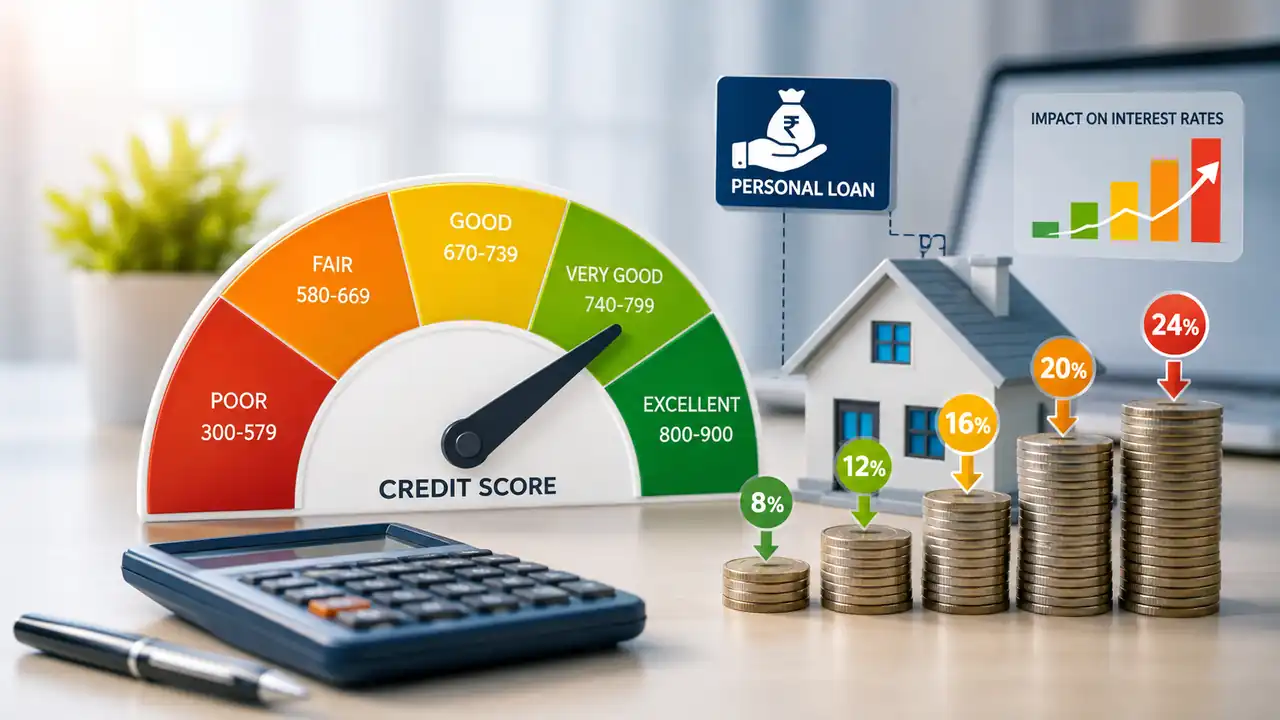
Two people may apply for similar loans and still receive different interest rates. One of the reasons can be hidden in a three-digit number that reflects how they have handled credit in the past. If you are comparing the best Personal Loan interest rates, understanding your credit score can give you useful context before you apply. It does not determine the final offer on its own, but it can influence how lenders assess the risk of lending to you.
So, what exactly connects your credit behaviour with the rate you may eventually be offered?
Why Your Credit Score Matters to Lenders
A credit score provides lenders with an indication of an applicant’s creditworthiness based on information recorded in their credit history. When evaluating a loan application, lenders may consider the score alongside factors such as income, employment, existing liabilities and repayment capacity.
A stronger score can indicate that a borrower has generally managed previous credit responsibly. This may reduce the perceived lending risk and could help the applicant qualify for more competitive terms.
A weaker credit profile, on the other hand, may lead to closer assessment. Depending on the lender’s policies and the applicant’s wider financial circumstances, this could affect the interest rate offered or even the approval decision.
How Credit Scores Can Influence Interest Rates
Interest rates on Personal Loans are not necessarily identical for every borrower. CIBIL notes that rates can vary depending on factors including an individual’s credit history, loan amount, income and credit profile.
This is why looking only at an advertised starting rate can be misleading. The rate eventually offered to you may depend on your individual financial profile.
For instance, someone with a strong repayment record and stable income may present a different risk profile from someone who has frequently missed payments or already manages several debt obligations. As a result, the two applicants may not necessarily receive identical loan terms, repayment conditions, or a similar personal loan repayment schedule.
Does a High Credit Score Guarantee the Lowest Rate?
Not necessarily.
A good credit score can strengthen an application, but lenders generally consider several variables rather than relying on the score alone. Income, employment history, existing loans, requested loan amount and repayment capacity may all contribute to the final assessment.
Therefore, even applicants with similar credit scores may receive different offers.
When searching for the best Personal Loan interest rates, it is more useful to consider your complete financial profile instead of assuming that crossing a particular score threshold automatically guarantees the lowest available rate.
What Should You Compare Beyond the Interest Rate?
The interest rate is important, but the overall borrowing cost deserves equal attention.
When comparing options for a Personal Loan in India, consider factors such as:
- Processing fees and applicable charges
- Loan tenure and monthly instalments
- Total repayment amount
- Prepayment or foreclosure conditions
- Late-payment charges
- Eligibility criteria
- Terms attached to advertised rates
A lower headline rate may not necessarily translate into the lowest overall cost if other charges are relatively high. Comparing loans using the same amount and tenure can provide a more meaningful view.
How Does HSBC Bank Fit Into the Comparison?
When reviewing Personal Loan options, borrowers may encounter different starting rates across established lenders. For context, HSBC Bank currently states that its Personal Loan interest rate starts from 9.75% per annum. The bank notes that this special rate applies to employees of select businesses and is subject to applicable terms and eligibility.
This illustrates an important point about advertised rates. A starting rate represents the lower end of an offering, not necessarily the rate every applicant will receive.
Borrowers should therefore read the eligibility conditions and applicable terms carefully before comparing one lender’s starting rate with another.
What Can Affect Your Credit Profile Over Time?
Credit scores are shaped by credit-related behaviour rather than a single action.
Paying dues on time is particularly important, as delayed payments can be viewed negatively. High utilisation of available credit and repeatedly applying for new credit may also affect how a borrower’s profile appears to lenders. CIBIL recommends maintaining timely payments, keeping balances controlled and applying for fresh credit cautiously.
Regularly reviewing your credit report can also be useful. It gives you an opportunity to understand your current credit position and identify information that may need attention before making a new loan application.
Should You Improve Your Score Before Applying?
If the loan requirement is not urgent, strengthening your credit profile before applying may put you in a better position.
Begin by clearing overdue payments, making existing repayments on time and reducing unnecessarily high outstanding balances. Avoid submitting several credit applications simply to see which lender approves one first.
It is equally important to assess affordability. A strong credit score may improve your borrowing position, but taking a larger loan than you can comfortably repay can create financial pressure later.
Look Beyond the Three-Digit Number
Your credit score can play an important role in the rate offered on a Personal Loan, but it is only one part of a broader lending decision. Income stability, existing obligations, loan amount and repayment capacity can also influence the final terms.
If you are evaluating the best Personal Loan interest rates, start by understanding your credit profile and then compare the complete borrowing cost across suitable options. Whether considering HSBC Bank or another provider of a Personal Loan in India, focus on the rate you actually qualify for rather than the lowest number displayed in an advertisement.
A well-informed borrowing decision is ultimately about finding terms that remain manageable throughout the repayment period, not simply securing the most attractive headline rate.