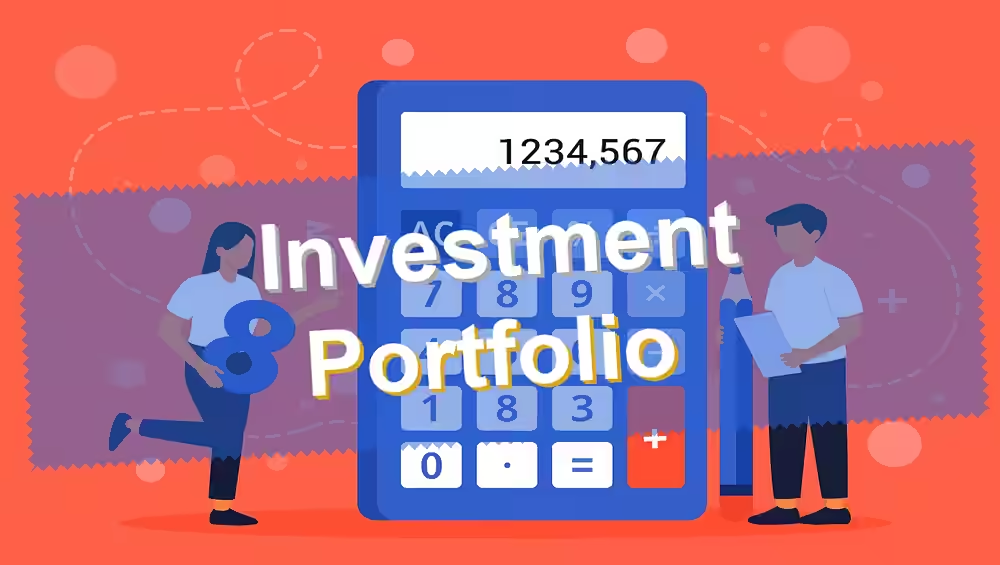
Your financial future depends on your ability to make wise investments. One useful tool that might assist you in monitoring and enhancing your investment portfolio is an investment portfolio calculator. No matter your level of experience as an investor, being able to utilize this tool effectively will greatly enhance your financial planning. You can monitor the health of your assets, identify potential threats, and make informed decisions with its help. A transparent picture of your portfolio’s health and potential growth might be yours just by entering your investment details. Readers understand the purpose early thanks to the investment portfolio calculator.
Accordingly, why would anyone need a tool like an investment portfolio calculator? Consider how perplexing it would be to navigate the intricate world of finance without a guide. It is easy to become bewildered by the multitude of investing opportunities, market fluctuations, and financial jargon. This calculator simplifies things by outlining a path to your financial objectives. Get a feel for how various investing strategies could influence your portfolio and adjust it according to your objectives and comfort level with risk.
Meaning of Investment Portfolio
A person’s or a company’s investment portfolio is a collection of financial holdings. Many other types of assets might be included in this category, including stocks, bonds, mutual funds, ETFs, and real estate. Making money is the ultimate goal of any investment portfolio, whether that be through capital appreciation, dividends, or interest payments. Diversifying your holdings across different types of assets might help you mitigate risk.
Now picture this: your investment portfolio includes stocks, bonds, and even some real estate. You can expect varying degrees of reward and risk from any of these investments. Relying on a single source of revenue is risky; diversification helps mitigate this risk. If the stock market were to fall, for example, you could be less likely to lose money if you invested in bonds or real estate. Your efforts to achieve consistent profitability can be better managed with this strategy.
Examples of Investment Portfolio Calculator
A wide variety of investment portfolio calculators are available, each tailored to a particular need. You could be able to input your current investments, their values, and the returns you anticipate using a simple online calculator. It goes on to show you the past performance and future potential of your portfolio. Additional features for more thorough calculators could encompass market simulations, risk assessment tools, and tax impact calculators. You can use these tools to better understand the potential impact of various economic scenarios on your investments.
A calculator that includes market simulations is one example. You can put your current portfolio through its paces in a variety of market scenarios, including a bull, bear, or flat market, by entering the relevant data. You can use the calculator to see how your portfolio could do in various scenarios, which will help you be ready for anything. Another example would be a tool that determines the impact of taxes on your investments. If you understand how taxes operate, you can make adjustments to reduce your tax liability and increase your refund.
Investors of all skill levels can benefit greatly from these calculators. If you’re an investor or just starting out, an investing portfolio calculator might be a lifesaver when it comes to making smarter selections. By providing a comprehensive overview of your finances, they empower you to invest with greater assurance.
How does Investment Portfolio Calculator Works?
A financial algorithm determines the performance of your assets based on the data collected by an investment portfolio calculator. You specify the assets by entering details like their category, present worth, projected return, and associated expenses. Then, based on this data, the calculator will indicate the overall health, risk, and potential future performance of your portfolio. The specifics of your investment portfolio will determine whether a financial advisor can assist you.
The process typically begins with data entry. You provide the calculator with details about each investment in your portfolio, including its purchase price, current value, and expected return. when entering these data, the calculator computes crucial metrics including the overall return on investment (ROI), the return when risk is included, and the diversification ratios. You can easily see the performance of your portfolio and identify areas that may require adjustments with these numbers. To make the risk more balanced, the calculator can suggest adding additional bonds if it finds that your portfolio is largely equity-based, for example.
Once you have this information, you can make sensible choices. A rebalancing of your portfolio can involve selling some stocks and buying more bonds. Another option is to diversify your portfolio even further by adding different asset classes. You can improve your portfolio’s performance and reduce your risk by using the calculator to see how these changes could influence it. In order to achieve your financial objectives, you must input data, review the results, and make adjustments as needed.
Formula for Investment Portfolio Calculator
An Investment Portfolio Calculator’s algorithm selection is instrument-specific. Varieties of criterion, risk-adjusted return, and return on investment are a few examples. Multiply the net profit by the investment cost to get the return on investment (ROI). Your return on investment (ROI) would be 20% (60,000 – 5000) divided by 5000, which is equal to 0.20. The Sharpe Ratio is a common method for comparing an investment’s risk premium to its volatility, while risk-adjusted return considers the investment’s volatility in isolation.
A lower Herfindahl-Hirschman Index (HHI) indicates a more diversified portfolio, which often equates to less risk, while other diversification indicators reveal the degree to which your portfolio is concentrated. You can calculate HHI by squaring the market shares of all of your portfolio’s assets. With three assets having market shares of 0.4, 0.35, and 0.25, your HHI would be 0.355, calculated as (0.4^2) + (0.35^2) + (0.25^2) squared. These and other calculations are used by the calculator to provide you with a comprehensive view of your portfolio’s performance and risk level.
Having a firm grasp of these equations will allow you to make more informed decisions. One way to compare the performance of various assets is to calculate their return on investment (ROI). Additionally, by examining your portfolio’s risk-adjusted return, you may ascertain the level of risk you are assuming. In order to create a more well-rounded portfolio, diversification measurements reveal the degree to which your investments are focused. Applying these formulas to your financial strategy can help it succeed.
Benefits of Investment Portfolio
You may have the independence and mastery you desire with an investment portfolio as well. You have the freedom to decide when investing how much of a risk you are willing to take based on your financial objectives. Consider increasing your holdings of bonds and cash equivalents if you suffer from loss aversion. However, if you are willing to take on additional risk, increasing your investment in stocks and other assets might lead to higher returns. Your investment strategy can be tailored to your desires and financial situation thanks to this adaptability. Having a diversified investing portfolio could also put your mind at rest. You can alleviate some of your financial anxiety by rest certain that your portfolio is diverse and expertly managed. Whether you’re saving for a down payment on a home, college tuition, or retirement, it will show you the way. One of the best ways to save for the future and increase your wealth is to build an investment portfolio.
Diversification
If you want your investment portfolio to succeed, diversification is a must. By spreading your investments across different asset classes, industries, and regions, you may make your portfolio more resilient to market fluctuations. If you diversify your investments, you reduce your overall risk because a gain from one investment might offset a loss from another. By using this strategy, you may make your portfolio more resilient to market fluctuations, ensuring a more stable financial future. Diversity also opens doors to new avenues of expansion, which can boost your returns.
Tax Efficiency
Another perk of a well-managed investment portfolio is that it helps you save money on taxes. Investing wisely may help you minimize your taxable income and maximize your returns. One example is tax-deferred investment accounts like 401(k)s and Individual Retirement Accounts (IRAs), which allow you to delay paying taxes on your investments until you withdraw them. Income from certain investments, such as municipal bonds, is not subject to taxes either. To maximize your portfolio’s after-tax returns, it’s important to understand how your investments may influence your tax liability. For those intent on building wealth via long-term investment, this is of paramount importance.
Liquidity
You can simply convert your investments into cash without suffering any loss in value if they are liquid. It is common practice for a well-diversified investment portfolio to include both liquid and non-liquid assets. Stocks and bonds can be quickly sold without significantly impacting their value. Although illiquid assets, such as real estate, could take more time to sell, they often yield higher rewards. Having a healthy cash reserve in your portfolio allows you to access funds quickly and take advantage of higher-yielding investments. In order to deal with unexpected expenses or take advantage of new investment opportunities, this adaptability is crucial.
Disadvantages of Investment Portfolio
You should be aware of the potential drawbacks of an investment portfolio in addition to its many advantages. The rapidity with which market conditions might shift is one of the main challenges. Investment values are subject to fluctuation, and substantial losses are possible during market downturns. For risk-averse investors, this volatility may be downright terrifying. Another drawback is the amount of work and time required to maintain a portfolio. Due to the need to investigate, monitor, and adjust, investing requires time and energy. Your returns may be less than you expect due to investment expenses such taxes, management fees, and brokerage fees.
Costs
Taxes, management fees, and brokerage fees are just a few of the numerous costs associated with investing in a portfolio. You may see a decline in the overall profitability of your investments as a result of these fees. If you trade frequently, for example, high brokerage fees could significantly reduce your profits. Mutual fund or exchange-traded fund management fees can potentially add up quickly. Also, taxes on dividends and capital gains might lower your earnings even more. If you know about these charges and look for investments that won’t cost you much, you can lessen their effect on how well your portfolio does.
Emotional Decision-making
Making decisions based on emotions is a common mistake while investing. Fear and worry can come from changes in the market and the economy, which can lead to rash judgments. For instance, selling stocks when the market is down can mean losing money and missing out on a chance to make money again. In the same way, trying to get high returns during a bull market can cause you to put too much money into riskier investments. For long-term success, it’s important to have a disciplined investment strategy and adhere to it, even when things become rough. Getting professional guidance can also give you a more objective view, which can help you make smart choices and avoid making judgments based on your feelings.
Time and Effort
It takes time and work to manage an investing portfolio. To make sure your portfolio stays in line with your financial goals, you need to do research, keep an eye on it, and make changes often. This procedure can take a long time and be hard, especially for people who are new to investing. Also, it’s important to keep up with market trends and the state of the economy so you can make smart choices. The time and effort needed might be a big problem for many investors. But employing automatic investment tools or getting aid from an expert can make the process easier to handle and more productive.
Recommended Calculators
FAQ
What is an Investment Portfolio Calculator?
You can use an Investment Portfolio Calculator to look at and keep track of your investments. You can enter information about your investments, such their current valuations, predicted returns, and fees, into it. The calculator then shows you how well your portfolio is doing, how risky it is, and how much it could increase in the future. It’s a useful tool for making smart investing choices and getting the most out of your portfolio.
How Does an Investment Portfolio Calculator Work?
An Investment Portfolio Calculator looks at the success of your investments by gathering information about them and using financial calculations. You enter information such as the kinds of assets, their current valuations, predicted returns, and any charges that come with them. After that, the calculator uses this information to give you an idea of how healthy your portfolio is, how risky it is, and how well it might do in the future. It’s like having a financial counselor who can give you advice based on the details of your investments.
What Information Do I Need to Use an Investment Portfolio Calculator?
To use an Investment Portfolio Calculator, you must enter information about your investments, such as the kinds of assets you own, their current valuations, predicted returns, and any charges that come with them. You might also have to type in information about your financial goals, how much risk you’re willing to take, and how long you want to invest. The calculator’s insights will be more reliable if your data is more exact and complete. This information lets the calculator look at how well your portfolio is doing and make personalized suggestions.
Can an Investment Portfolio Calculator Predict Future Market Conditions?
You can use an Investment Portfolio Calculator to make simulations and predictions based on past data and current market patterns. But it can’t effectively predict what the market will be like in the future. There are many things that can affect the market, which makes it always uncertain. The calculator can help you figure out how different situations might effect your portfolio so that you can be ready for anything. It’s a good tool for planning and managing risk, but you should always keep in mind that market projections are never 100% accurate.
Conclusion
Anyone who wants to take charge of their financial future should use the Investment Portfolio Calculator. It makes the complicated world of investing easier to understand by giving you straightforward information about how your portfolio is doing and how it can develop in the future. You can make smart choices, control risks, and improve your investment strategy by learning how to utilize this tool correctly. The calculator shows you how to reach your financial goals, whether you’re an experienced investor or just starting out. This ending shows how the investment portfolio calculator sharpens understanding.