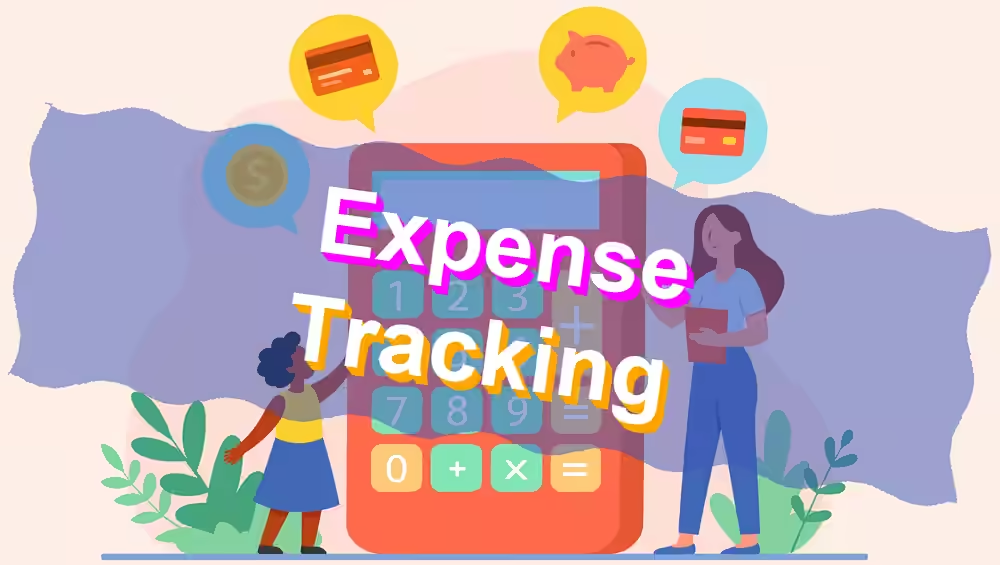
An integral part of personal and professional financial management is maintaining a record of expenditures. By monitoring your spending habits, you may improve your financial decision-making, increase your savings, and decrease your expenditures. One useful tool for budgeting is an expense monitoring calculator, which makes it simple to record, categorize, and review all of your spending. Explore the comprehensive capabilities of the expense tracking calculator for analysis.
Anyone looking to get a better grip on their own finances, whether they’re a freelancer, a small business owner, or someone else entirely, can benefit greatly from using a spending monitoring calculator. You can keep on top of things, discover ways to save money, and achieve your financial objectives with its guidance. Digital tools have made it easier and more accessible than ever before to keep track of spending.
Meaning of Expense Tracking
To maintain financial discipline, it is necessary to record and monitor all of one’s outlays of cash. The idea is to categorize your spending into different areas, such as housing, transportation, food, entertainment, and more. This way, you won’t lose track of your monthly spending. Keeping a record of your spending will help you get insight into your spending habits and identify areas where you can make cuts.
You can manage your finances in many ways. Writing down one’s purchases in a notepad is an old-fashioned method that some individuals like. A number of individuals maintain tabs on their spending with the help of digital tools such as spreadsheets or applications. The key is consistency, regardless of the approach you take. Ideally, you should record your expenditures at least once a day so you can see where your money is going. Despite how tedious it seems, it’s worth your time. By recording your expenditures, you may gain control of your finances and make wiser choices with your money.
Examples of Expense Tracking Calculator
There are a lot of contexts where expense tracking calculators come in handy. A trip cost calculator is a useful tool to have on hand when you’re making travel plans. Travel expenses such as plane tickets, hotel stays, food, and gas could be entered. The trip planning process would be facilitated by the calculator’s final estimate.
Maintaining tabs on expenditures associated with a single undertaking is yet another illustration. A wedding, home renovation, or community event can all have a hefty price tag, but with the help of an expense monitoring calculator, you can keep track of every cent. Watch your spending grow or shrink in real time as you input your costs. If you do this, you will be more likely to avoid going over your spending limit.
Sharing housing or other living expenses with a roommate or family member can be easier to keep track of with the help of an expense tracking calculator. By entering their respective contributions, everyone can see exactly who is responsible for what in the final tally. This can help ensure that everyone pays their fair part and prevent things from getting out of hand.
How does Expense Tracking Calculator Works?
In order to keep track of your spending, you can use a tool that allows you to enter your expenses and categorize them. The first step is to enter the date, amount, and cost type for each expense. Some calculators also allow you to add categories or notes to help you keep track of things better. The calculator provides a breakdown of your expenditure by category when you input your expenses.
You may get a better look at your spending patterns with the graphs and charts that come with most expense tracking calculators. With the help of these graphs, you can see exactly where your money is going and how much you could save. A large portion of your budget may, for example, be designated for dining out. With this new knowledge, you may cut back on unnecessary expenses and increase your savings.
Alerts and budgeting tools are common extras in expense tracking calculators. Each section can have its own budget, and you can set limits and receive notifications when you’re approaching them. If you do this, you will be more likely to avoid going over your spending limit. In order to keep track of your transactions, certain calculators can also link to your bank or credit card accounts and input them automatically.
Formula for Expense Tracking Calculator
An spending tracking calculator has a very straightforward formula. As a first step, jot down your earnings for a set period of time, say a month or a year. After that, you should record each expense and categorize them accordingly. Essentially, it boils down to this: net savings = total income minus total expenses. You may easily examine your remaining funds after paying all of your bills using this method.
In contrast, spending tracking calculators often use more intricate formulas to provide a comprehensive view. They may, for instance, calculate your savings rate, which is your monthly savings as a proportion of your salary. The savings rate can be calculated by dividing total income by savings and then multiplying the result by 100. You can use this to see how successfully you’re saving money and where you might make improvements.
Furthermore, in order to analyze your spending habits, expense tracking calculators could use algorithms. They may, for instance, determine the proportion of your budget that goes toward various categories of expenditure. Your spending is transparent, so you may make adjustments as needed. For instance, you have the option to forego amusement expenditure in favor of savings or investment.
Benefits of Expense Tracking
Another major perk of keeping track of your spending is that it helps you create a budget. A more accurate and practical budget can be created if you have a good idea of how much money you spend. Staying within your budget becomes much easier when you have a plan for how to spend your money on necessities and wants. In the long run, this can help you save money and avoid going into debt.
Achieving Financial Goals
If you want to save for a down payment, pay off debt, or be financially prepared for retirement, then keeping track of your spending is a must. Being aware of your spending habits and making adjustments as needed will help you stay on track with your financial goals. For example, if you want to save up for a future purchase, you could decide to cut back on non-essential spending.
Preparing for Emergencies
If you maintain a record of your spending, you will be better prepared to deal with unexpected financial issues. If you keep track of your money, you can avoid getting into debt and better prepare for emergencies. To cover unforeseen expenses like medical bills or car repairs, for example, you can decide to establish an emergency fund. If this happens, you may rest easy knowing that your money is secure.
Improved Financial Awareness
You may gain a far better grasp of your financial situation if you record all of your expenditures. Keeping track of your spending will help you have a better grasp on your financial situation. Being cognizant of this can assist you in making more prudent financial decisions and controlling your spending. If you notice that you’re buying unnecessary items, for instance, you may resolve to cut back.
Disadvantages of Expense Tracking
There are many advantages to keeping track of your spending, but there are also some disadvantages. The fact that you have to constantly calculate and record your expenses is one of the main issues. If you’re already swamped with tasks, making note of each transaction could be tedious. Because of the possibility of inaccurate and inconsistent data, it may be difficult to obtain an accurate picture of your financial situation.
Risk of Oversight
Keeping track of your spending could lead you to forget things. Despite your best efforts, it is easy to overlook expenses or fail to record them. Having an inaccurate or incomplete view of your expenditures can make it harder to make wise financial choices. Even a little purchase could slip your mind, but over time, those little charges can add up and throw off your budget.
Adaptation Challenges
It could be challenging for some individuals to change their habits so they can better monitor their spending. If you aren’t accustomed to keeping track of your expenses, it could be difficult. However, you must be disciplined and do it consistently. This may initially make people reluctant to the process or make it hard for them to remain with it. For those who tend to make impulsive purchases, keeping track of each transaction may prove to be a challenge.
Privacy Concerns
You may be concerned about your privacy when you use digital technologies to track your costs. You are disclosing sensitive information when you input your bank details into a software or app. The likelihood of hackers gaining access to or stealing your data increases in this case. To give just one example, your bank details could be at danger if the app isn’t secure. Keeping your data safe requires reliable tools and proper procedures.
Recommended Calculators
FAQ
What is an Expense Tracking Calculator?
If you want to know how much money you spend and how to evaluate it, you need an expense monitoring calculator. You can track your spending by entering your receipts and sorting them into different categories. Better financial decisions and the realization of your financial goals are both possible outcomes of this.
How Do I Start Using an Expense Tracking Calculator?
Before you can begin using a spending monitoring calculator, you must choose one that suits your needs. It could be specialized software, a spreadsheet, or a mobile app. Entering your income and expenses should be your first step after selecting your tool. Expenditures for lodging, transportation, meals, and entertainment should be catalogued separately. Regularly updating your expense data is essential for gaining a comprehensive view of your spending.
Can I Use an Expense Tracking Calculator for Business Expenses?
Expense monitoring calculators can be used for both personal and business costs. Inventory, salaries, marketing, and operating expenses are some ways to organize your company’s spending. Using this information might lead you to potential cost-cutting and revenue-boosting opportunities. If you want to maximize your refund while filing your taxes, keeping tabs on business expenditure could be a good first step.
How Often Should I Update My Expense Tracking Calculator?
Your spending tracking calculator should ideally be updated daily. This verifies that the data regarding your expenditures is accurate and up-to-date. You can monitor your spending and make adjustments as needed with the help of regular updates. For instance, you can avoid going overboard by cutting back if you notice that you’re approaching a given category’s budget limit.
Conclusion
The key to effective money management is maintaining a record of all of your spending. By closely monitoring your spending, you may improve your financial decision-making, increase your savings, and accomplish your financial goals. A cost tracking calculator streamlines the process by providing an easy-to-use tool for keeping track of, organizing, and reviewing your spending. If you own a small business, are a freelancer, or simply want more control over your own finances, this tool can be a lifesaver. In summary, the expense tracking calculator delivers useful context.