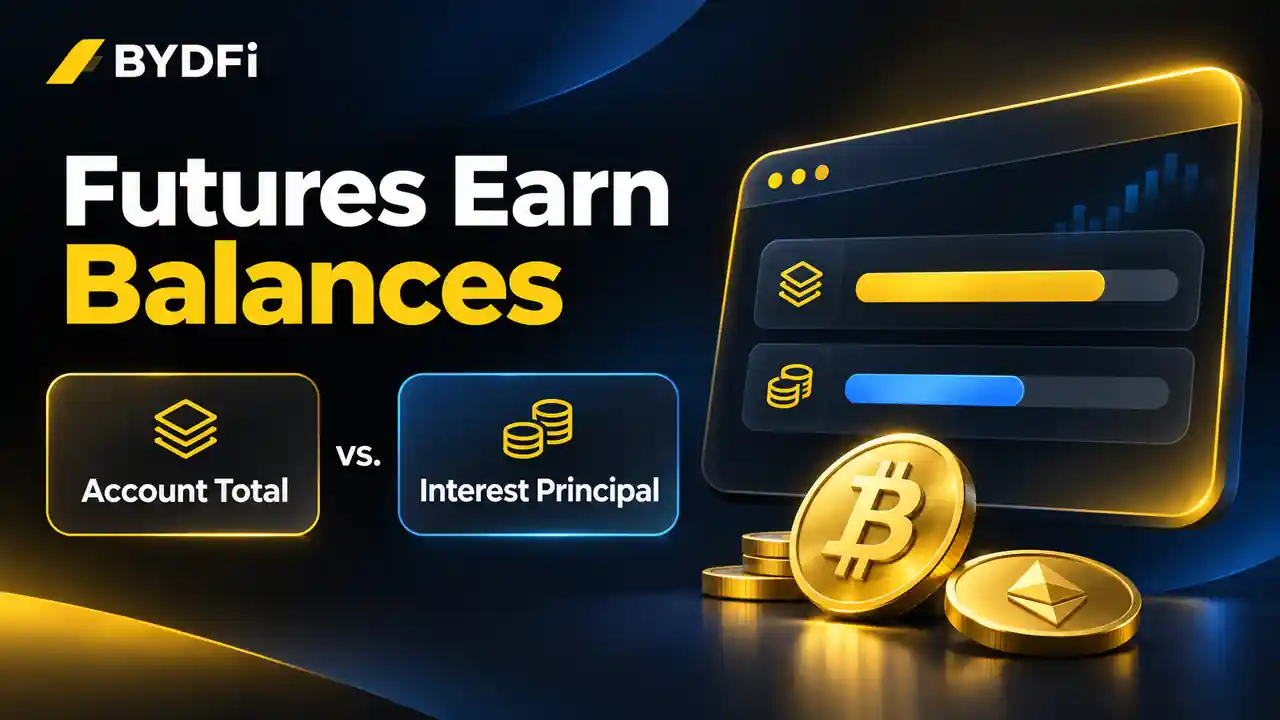
A crypto interest account can display a balance that is larger than the principal used to calculate interest. The difference can come from which funds qualify, when the balance was measured and whether a principal cap applies. Comparing today’s account total with yesterday’s interest payment skips those details.
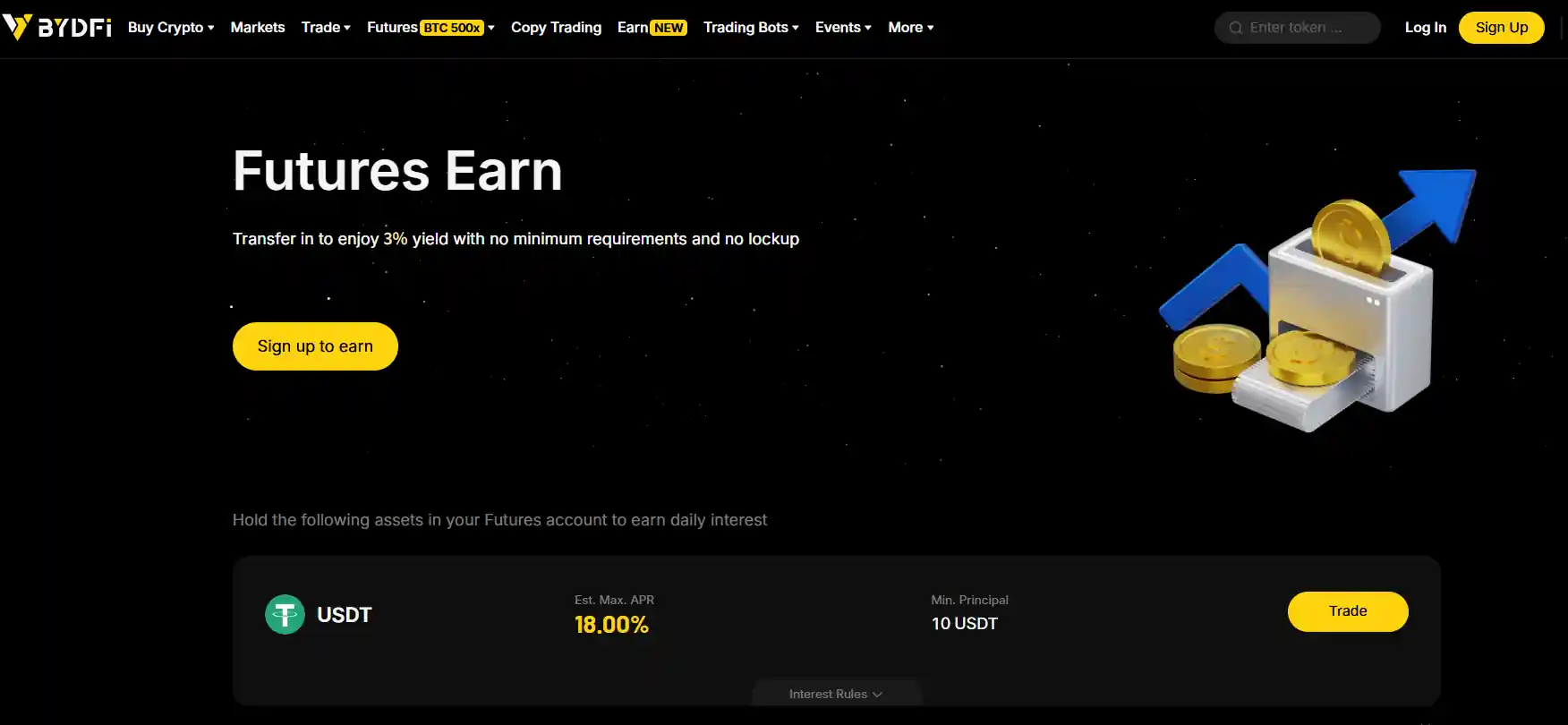
For BYDFi Futures Earn, eligible funds remain in the Futures account and can continue to serve as trading margin. Its current FAQ explains that interest-bearing principal uses an average of balance snapshots taken during the calculation period. That makes the timing of transfers relevant even when the latest balance looks correct.
Start with the balance label
Before calculating a return, identify what the displayed number measures. An overall asset total may cover accounts or assets outside the earning feature. Available balance describes funds available for use, while interest principal is the amount recognized for the relevant calculation period.
| Figure | What it tells you |
| Overall account total | A broad asset view whose scope depends on the screen. |
| Available balance | The portion available for use under the account’s margin and order rules. |
| Eligible wallet funds | Wallet components that qualify under the product’s rules. |
| Interest-bearing principal | The amount used to calculate interest for a specified period. |
| Futures position value | Trading exposure used to determine an applicable APR tier. |
Position value is especially easy to misread. A leveraged position can have a notional value much larger than the funds supporting it. That notional amount does not become additional cash earning interest.
Which wallet funds count toward principal?
BYDFi’s published product guide describes the wallet components using this formula:
Principal = Available balance + Frozen balance + Margin − Bonus
Under that definition, bonus funds are excluded. Funds allocated to margin or frozen for orders are included in the listed components, so subtracting all committed funds and using only available balance would misread the formula.
Consider a hypothetical wallet with 600 USDT available, 200 USDT frozen and 300 USDT in margin, including 100 USDT of bonus funds. Applying the published formula gives:
600 + 200 + 300 − 100 = 1,000 USDT
The components total 1,100 USDT before the bonus deduction. This example explains the adjustment; it does not define every dashboard’s account-total field. Use the platform’s component definitions to avoid double-counting overlapping figures.
This calculation also comes before the time-based measurement. Principal for a whole interest period does not have to be a qualifying balance at one point in time.
Why a transfer changes the current balance before the average
As stated on the BYDFi FAQ of 28 October 2026 and the current product page, the principal amount on which interest is paid is an average of many snapshots, so changing to a new fund position will affect the new qualifying balance before the average.
Suppose a simplified interest period contains four equally weighted snapshots:
| Illustrative snapshot | Eligible balance |
| First | 1,000 USDT |
| Second | 1,000 USDT |
| Third | 2,000 USDT |
| Fourth | 2,000 USDT |
The average is 1,500 USDT. At the end of the period, the current balance is 2,000 USDT, but that larger amount was not present throughout the observations.
Four snapshots and equal weighting are assumptions for this example, not a statement of the platform’s actual sampling schedule. The example shows why an average can differ from the latest balance. A withdrawal can produce the reverse relationship, with the current balance below the earlier period’s average.
How principal and the USDT interest rate work together
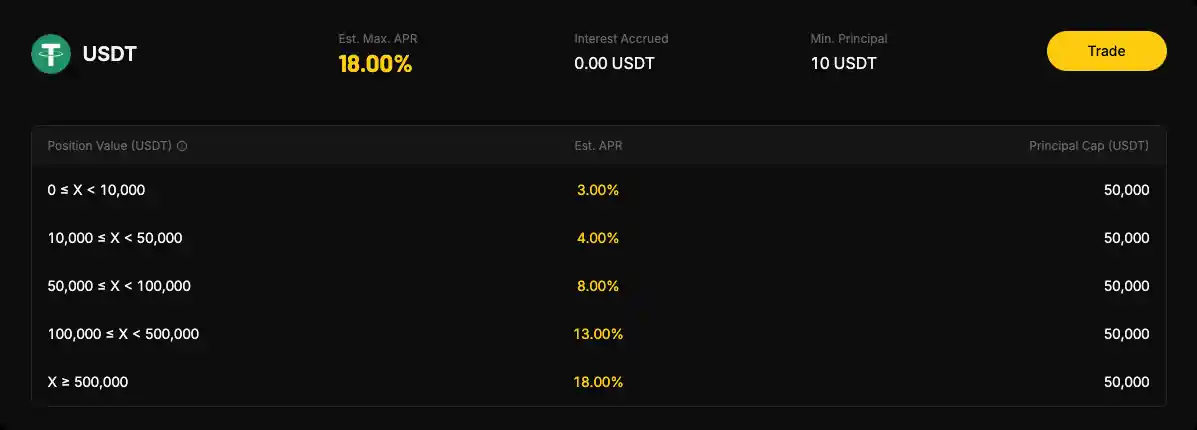
Principal answers how much qualifies to earn. The USDT interest rate answers which annualized percentage applies. Position value can affect the rate tier without becoming the principal itself.
BYDFi lists a base APR that does not require an open Futures position. Additional rate tiers depend on eligible position value, and principal caps can limit the balance earning a particular tier rate. Estimated APRs can change with market conditions and platform rules, so the highest displayed rate should not be applied automatically to an entire account total.
To make USDT earn interest through this feature, the product must be enabled and the funds must meet its eligibility rules. Opening or enlarging a position is a separate trading decision. A higher estimated rate can be outweighed by losses from crypto futures trading.
When comparing stablecoin yield, check the eligible principal and any tier limits alongside the rate. Two balances of the same size can produce different interest amounts if their qualifying amounts, rates or participation periods differ.
Estimate interest using the relevant period
A simple daily equivalent helps show why the principal matters. Assume the 1,500 USDT average in the previous example represents a full day, all of it qualifies, and a constant 3% APR applies without additional tiers or boosts.
Daily interest estimate = 1,500 × 0.03 ÷ 365 ≈ 0.12329 USDT
Using the latest 2,000 USDT balance instead would give approximately 0.16438 USDT. The larger result comes from applying a later balance to the whole day.
These are hypothetical simple-interest calculations, not promised payments. Actual interest on USDT depends on the product’s recognized principal, applicable rates and calculation rules. APR expresses an annualized rate; it is not a daily percentage or a guarantee that the same rate will remain available for a year.
Check the credit separately from the Futures balance
The current BYDFi product page and newer FAQ state that earnings are credited to the Spot account the following day. An interest payment may therefore appear in a different account from the funds that generated it. Check the earnings record and receiving account before treating an unchanged Futures balance as a missing payment.
To reconcile a difference, work through these checks:
- Confirm whether the number is an overall total, available balance or interest principal.
- Review eligible wallet components and any bonus exclusion.
- Match the principal to its calculation period, including transfers made during that period.
- Check the applicable APR, principal cap and any separate booster conditions.
- Match the recorded interest payment to the earning period and receiving account.
When assessing a crypto savings account, compare the interest payment with the eligible principal and rate for the same period. Transfers, bonus exclusions and balance snapshots can explain why that principal differs from the account total shown today. Keeping interest earnings separate from trading profit and loss also makes it easier to see how each contributes to changes in the account.